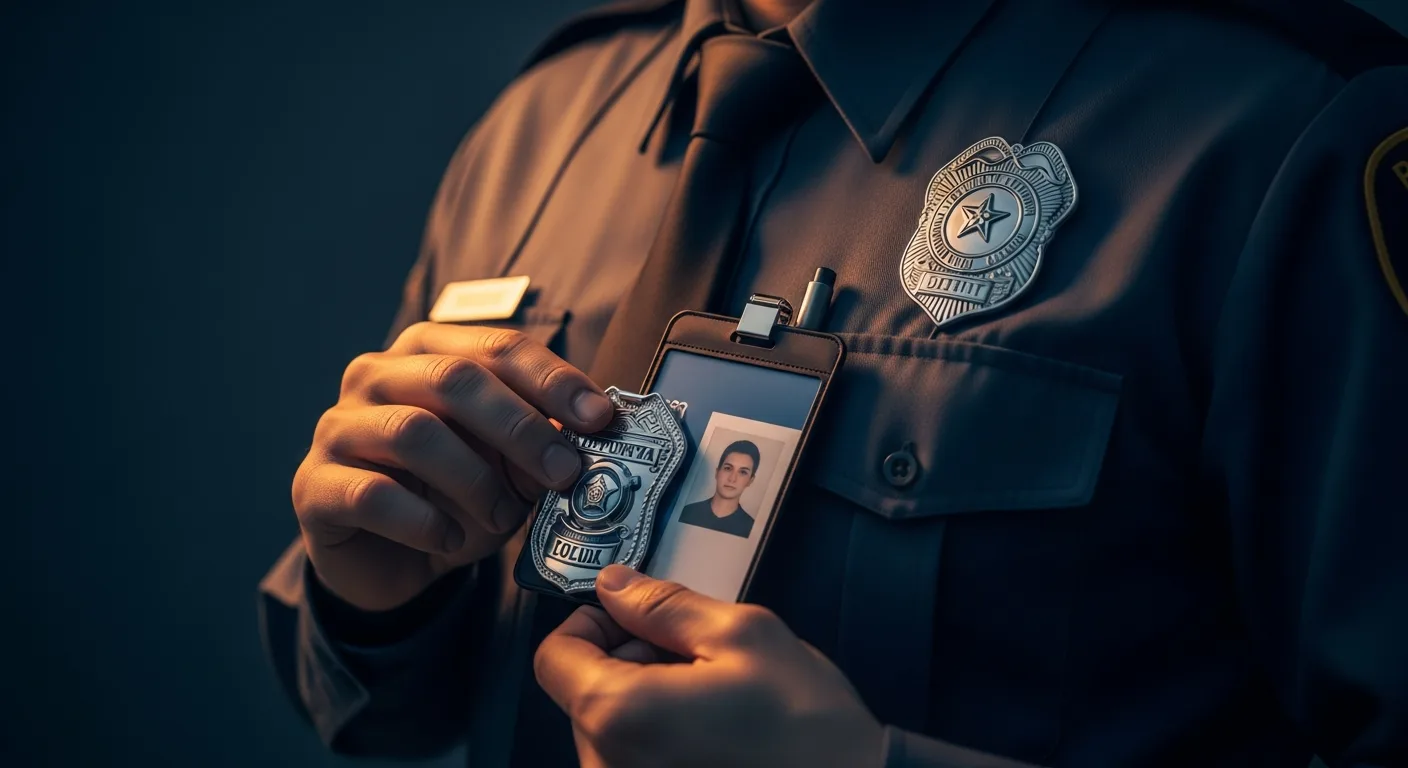
Hiring security in Delaware? Here's who regulates it, what a company and its guards must be licensed to hold, how armed guards are permitted, and how to verify a license yourself in minutes.
Hiring a security company in Delaware? Confirming its license is the single most important check you can make — it's what tells you the provider is lawful, insured, and accountable, and it shields you from the negligent-hiring liability that comes with putting an unvetted, uninsured operation on your property. This guide covers who regulates security in Delaware, what a company and its guards must hold, how armed work is permitted, and exactly how to verify a license yourself.
In Delaware, security is regulated by DSP Professional Licensing. A company must hold a Class B Licence — Private Security Agency (Class C covers a combined investigative and security agency), and guards hold a Noncommissioned security guard licence (the “Yellow Card”). There is no public register that answers this for you — see the verification steps below.
What makes Delaware different
Delaware has no public licence lookup for security: the state's DELPROS system covers the Division of Professional Regulation's boards only, and private security sits with the State Police instead. Field checks a buyer can make instead: the licence must be posted at the place of business, agencies must keep a current employee book on site, and an armed guard's uniform patch “must not be generic in nature” and “must have the name of the agency printed on it” (rule 10.4). Note a precision often got wrong: rule 1.3 does not MANDATE open carry — it CONDITIONS open carry on completing the three annual qualifying shoots, and the patch requirement sits in a separate rule from the firearms one.
Delaware quietly did something that no buyer briefing has caught up with: it abolished citizen's arrest. 11 Del. C. §1914, added by 85 Del. Laws, c. 74, §1, now provides that “arrest or detention by any person who is not specifically authorized by statute to effect an arrest or detention is prohibited,” with a single exception — a private citizen may assist “upon request of a peace officer or if the peace officer is incapacitated.” That inverts the usual analysis. In most states you ask how far a guard's common-law arrest power stretches; in Delaware you ask whether a specific statute authorises the detention at all, because if none does, the detention is unlawful no matter how reasonable it looked. The practical consequence is that 11 Del. C. §840(c), the shoplifting detention provision, stops being one option among several and becomes the principal statutory authority a Delaware guard actually operates under — which makes its limits (on-premises only, probable cause, and detention solely “for the purpose of summoning a law-enforcement officer”) the real operating envelope, not fine print. The second thing buyers get wrong here is training. Delaware sets no hour count whatsoever for unarmed guards. Section 4.0 of 24 DE Admin. Code 1300 is the complete unarmed training rule, and it specifies a Board-approved programme, a curriculum by topic, a 75% pass mark on a mandatory test and a one-year recency window — and no hours at all. That is not a gap in the research; it is the design. Delaware regulates unarmed competence by examination and armed competence by hours and marksmanship. So “how many hours does your Delaware guard have?” is the wrong question to put to a vendor. “Which Board-approved programme, and what did they score?” is the right one.
Who regulates security in Delaware
Private security in Delaware is regulated at the state level by the Delaware State Police, Professional Licensing Section, under the Board of Examiners of Private Investigators and Private Security Agencies. A legitimate firm holds a Class B Licence — Private Security Agency (Class C covers a combined investigative and security agency) from DSP Professional Licensing, meaning it has cleared the state's ownership, background-check, insurance, and record-keeping requirements. That license number is the first thing to confirm — ask for it in writing and verify it yourself on Delaware State Police Professional Licensing Section (no public lookup — verification by email) rather than trusting a certificate on the wall. The licensing authority can also suspend or revoke a license for misconduct, so a live status check tells you not just whether a firm is licensed, but whether it's in good standing.
What each security credential authorizes in Delaware
"Licensed" alone doesn't tell you what an officer is actually cleared to do — Delaware uses more than one credential, and they aren't interchangeable. Here's what each one authorizes:
| Credential | What it authorizes |
|---|---|
| Noncommissioned security guard (Yellow Card) | Unarmed security work; minimum age 18 |
| Commissioned security guard (Red Card) | Carrying a firearm or projectile weapon on duty; minimum age 21; carrying without it is unlawful |
| Class B Licence — Private Security Agency | Owning and operating a private security agency; the owner must be at least 25 with four years' management experience at a licensed security agency, five years' investigative experience, or police service |
Guards and training
Individual officers in Delaware generally must hold a Noncommissioned security guard licence (the “Yellow Card”), and the state requires a Board-approved security guard training programme certified by mandatory testing with a passing grade of 75%, covering rules and regulations, legal requirements and limitations, use of force, ethics, emergency services, diversity, communication, asset protection and terrorism — Delaware sets NO hour count; the standard is competency-based. A valid company license doesn't guarantee every officer on the roster is credentialed and trained, so confirm the guards actually assigned to your site hold current registrations — verifying the company and the people are two separate checks.
Armed guards and firearms in Delaware
Arming a guard in Delaware takes more than the base credential: an armed officer needs a commissioned security guard licence (the “Red Card”), an endorsement on the unarmed card, with a minimum age of 21. Armed coverage also raises your exposure — a firearms incident can reach the client through vicarious-liability and negligent-hiring theories, and standard general-liability policies often exclude firearms — so confirm the specific armed credential (not just the base registration) and the firm's firearms coverage, and reserve armed posts for a documented threat. Our armed vs. unarmed guide covers the decision in depth, and you can compare armed security services directly.
Delaware's armed regime is one of the most prescriptive in the country, and almost all of it lives in section 1.0 of 24 DE Admin. Code 1300 rather than in the statute. Entry is rule 1.2: no licensee may carry a firearm without first passing an approved course and an initial qualification administered by an approved Professional Licensing Firearms Instructor, and “The course of instruction shall include a minimum 40 hours of training.” The Section may waive the 40 hours “depending upon the applicant's professional credentials, training, or work experience (i.e. prior law enforcement),” but a waived applicant must still qualify on a day and a low-light shoot. Ongoing authority is rule 1.3, and note precisely what it conditions: “In order to open carry a firearm while in the performance of their duties, licensees … must shoot a minimum of 3 qualifying shoots per calendar year, scheduled on at least 2 separate days, with a minimum 60 days between scheduled day shoots. Of these 3, there will be 1 mandatory ‘low light' shoot which may be combined with a day shoot.” The minimum passing score is 80% (rule 1.9), and under rule 1.7 the licensee must qualify “with the same make/model/caliber of weapon that the licensee will carry” — so qualification is weapon-specific, not generic. Delaware also restricts the hardware itself, which few states do: rule 1.4 permits only 9mm, .357, .38, .40, .45 and .357 SIG, and rule 1.5 requires a revolver or semi-automatic that is “double-action or double-action only”, while rule 1.8 bars reloaded ammunition. Changing weapons mid-year is a governed event: rule 1.12 requires the Director's approval plus a fresh day and low-light qualification, with another day shoot 60 days later in the same calendar year, and rule 1.12.2 bars any weapon change after September without prior approval. Armed licences run one year (rule 1.11), with agency-level compliance documentation due to the Section by 15 January for the previous calendar year. Against the civilian regime the interaction is clean: rule 1.3 authorises open carry on duty, whereas concealed carry remains a separate and demanding civilian licence under 11 Del. C. §1441 — a written application to the Prothonotary at least 15 days before the next term of Superior Court, accompanied by “a certificate of 5 respectable citizens of the county” attesting to character and to the necessity of carrying. Carrying concealed without that licence is a class D felony for a firearm under §1442(b). Nothing in rule 1300 confers concealed authority, so a guard who conceals on the strength of the armed licence alone is exposed.
| On-duty carry | Open carry on duty, and the rule is explicit that open carry is what the annual qualification buys: 24 DE Admin. Code 1300 rule 1.3 conditions the three yearly shoots on carrying “in order to open carry a firearm while in the performance of their duties.” Concealed carry is NOT conferred by the security credential — it requires a separate civilian licence under 11 Del. C. §1441, and carrying a concealed firearm without one is a class D felony under §1442(b) |
| Armed permit | The commissioned armed licence, valid 1 year (rule 1.11). Entry requires an approved course plus initial qualification by an approved Professional Licensing Firearms Instructor, including “a minimum 40 hours of training” (rule 1.2), waivable on prior professional credentials such as law enforcement — but a waived applicant must still qualify on a day and a low-light shoot. Minimum passing score 80% (rule 1.9). Qualification is weapon-specific: the licensee must qualify with “the same make/model/caliber of weapon that the licensee will carry” (rule 1.7). Permitted calibers are limited to 9mm, .357, .38, .40, .45 and .357 SIG (rule 1.4), the weapon must be a double-action or double-action-only revolver or semi-automatic (rule 1.5), and reloaded ammunition is barred (rule 1.8) |
| Requalification | Three qualifying shoots per calendar year, scheduled on at least two separate days, with a minimum 60 days between scheduled day shoots; one of the three must be a low-light shoot, which may be combined with a day shoot, and two day shoots may not fall on the same date (rule 1.3). Falling short may suspend the firearms licence until the three shoots are made up (rule 1.3.1), with discretionary waivers for military service and FMLA or agency-approved leave; a licensee suspended 36 months or more from the anniversary of initial qualification must repeat the full 40-hour course (rule 1.3.2). Agencies must document compliance to the Professional Licensing Section by 15 January for the prior calendar year, with shoots completed by 31 December (rule 1.11) |
| Other weapons | Delaware regulates these expressly, which many states do not. 24 DE Admin. Code 1300 rule 3.1 provides that the Board “only approves security guards and armored car guards licensed under 24 Del.C. Ch. 13 to carry law enforcement style batons, inflammatory agent sprays, chemical sprays and handcuffs,” and only “after the security guard/armored car guard completes the appropriate training program with a certified instructor as required by the manufacture of the weapon/item.” The standard is therefore set by MANUFACTURER specification rather than by a state hour count, and rule 3.1 puts the burden on the individual guard “to maintain certification and requalification with the weapon/item consistent with manufacturer standards.” Rule 3.1.1 closes the list: “Under no circumstances would a licensee be permitted to carry any other type weapon/item, unless first approved by the Director of Professional Licensing.” Electronic control devices are NOT among the four approved items, so carrying one would require the Director's express approval |
What security guards can and can't do in Delaware
Start with the prohibition, because in Delaware it now frames everything else. 11 Del. C. §1914(a): “Except as set forth under subsection (b) of this section, arrest or detention by any person who is not specifically authorized by statute to effect an arrest or detention is prohibited.” Subsection (b) allows a private citizen to assist only “upon request of a peace officer or if the peace officer is incapacitated.” There is no general private-arrest section left to rely on — §1904, the arrest-without-warrant provision, is drafted throughout as “An arrest by a peace officer,” and §1902's investigative detention is likewise a power of “A peace officer.” The statutory authorisation a security guard does have is the shoplifting privilege, and its wording repays close reading. §840(c) reaches “A merchant, a store supervisor, agent or employee of the merchant 18 years of age or older, who has probable cause for believing that a person has intentionally concealed unpurchased merchandise or has committed shoplifting,” and permits that person, “for the purpose of summoning a law-enforcement officer, [to] take the person into custody and detain the person in a reasonable manner on the premises for a reasonable time.” A contracted guard firm is reached — but as an agent of the merchant, not as a named independent contractor, so the agency relationship should be papered rather than assumed. Note three limits stricter than the national norm: the standard is probable cause, not the “reasonable grounds” most states use; detention is confined to the premises, with no pursuit-off-premises clause; and the only lawful purpose is summoning police — not recovering merchandise, not obtaining identification, not extracting a statement. §840(d) then supplies the protection, and it is the strong kind: a merchant, supervisor, agent or employee who detains, or who “causes or provides information leading to the arrest of any person,” “shall not be held civilly or criminally liable for such detention or arrest provided they had, at the time of such detention or arrest, probable cause to believe that the person committed the crime of shoplifting.” Both flavours of immunity, hinged entirely on probable cause. On force, Delaware's justification subchapter is unusually favourable to contracted guards. §466(a) justifies force to prevent criminal trespass or burglary, to prevent entry, or to prevent theft or criminal mischief, and each of its three subdivisions extends to property “in the defendant's possession or in the possession of another person for whose protection the defendant acts” — that clause is what puts a guard protecting a client's premises squarely inside the section. §466(b) imposes an operational precondition worth training to: the guard must “first request the person against whom force is used to desist from interference with the property,” unless the request would be useless, dangerous, or the property would be substantially harmed first. §466(d) then grants civil immunity on a conviction-contingent basis: “Where a person has used force for the protection of property and has not been convicted for any crime or offense connected with that use of force, such person shall not be liable for damages or be otherwise civilly liable to the one against whom such force was used.” And §464(e)(2)b supplies the retreat rule that matters most on post: a defendant “is not obliged to retreat in or from the defendant's place of work, unless the defendant was the initial aggressor.”
How to verify a security license in Delaware
Verification takes only a few minutes and is the check that protects you:
- Get the license number in writing from the provider — don't accept a logo or a verbal claim.
- Know what the official source can and cannot tell you — Delaware State Police Professional Licensing Section (no public lookup — verification by email). Because it will not confirm a security provider for you, ask the firm for the authorization it actually holds and confirm that with the body that issued it.
- Confirm the record is active, unexpired, matches the exact legal business name and address, and shows no disciplinary action.
- Verify the officers — confirm each holds a current Noncommissioned security guard licence (the “Yellow Card”), plus the armed credential for any armed post.
- Confirm insurance and subcontracting — request a current certificate of insurance and confirm it meets or exceeds for a Class B private security agency, a $10,000 surety bond (minimum one year) plus $1,000,000 liability insurance per occurrence; a Class C combined agency requires a $15,000 bond, plus workers' compensation, and ask in writing whether any of your posts will be subcontracted to another firm.
Re-verify at renewal. Renewal in Delaware: agency licences run two years from the last day of the month of approval; the unarmed Yellow Card runs five years; armed firearms licences are valid one year. A credential can also be suspended between renewals, so a check isn't one-and-done — re-check at renewal time and before signing a new contract.
Our national guide on how to verify a security company's license explains what to look for on the record; our hiring guide and cost guide cover the rest of vetting and pricing.
Misdemeanor (no class letter assigned). Whoever violates the chapter, except where another penalty is provided, is guilty of a misdemeanor and may be fined a civil or administrative penalty of not more than $10,000. The underlying prohibition is that no person may act as a private security guard or engage in the business of a private security agency without first obtaining a licence or identification card. (24 Del. C. §1330). And the exposure isn't only the provider's — an operator who puts an unlicensed, uninsured guard on site inherits the negligent-hiring liability, which is exactly what a two-minute license check prevents.
Hire a licensed security company in Delaware
Ready to hire in Delaware? Get free quotes from licensed security companies, browse verified providers, or estimate pricing with our security cost calculator before you talk to anyone.
Frequently asked questions
Who licenses security companies in Delaware?+
How do I verify a security company's license in Delaware?+
What do armed security guards need in Delaware?+
Can security guards carry guns in Delaware?+
Can a security guard detain or arrest you in Delaware?+
What's the penalty for hiring an unlicensed security company in Delaware?+
Share this guide
Sources
- Delaware State Police Professional Licensing Section (no public lookup — verification by email)
- 24 Del. C. ch. 13 — Private Investigators, Private Security Agencies and Armored Car Agencies
- 24 DE Admin. Code 1300 — Board of Examiners of Private Investigators & Private Security Agencies
- Delaware State Police — Security Guards
- US Bureau of Labor Statistics — Security Guards