Unarmed guards bill around $22–$35/hour — about $8,000–$12,800/month for a single daily post. Here's what's in that rate and the floor below which a quote can't be legitimate.
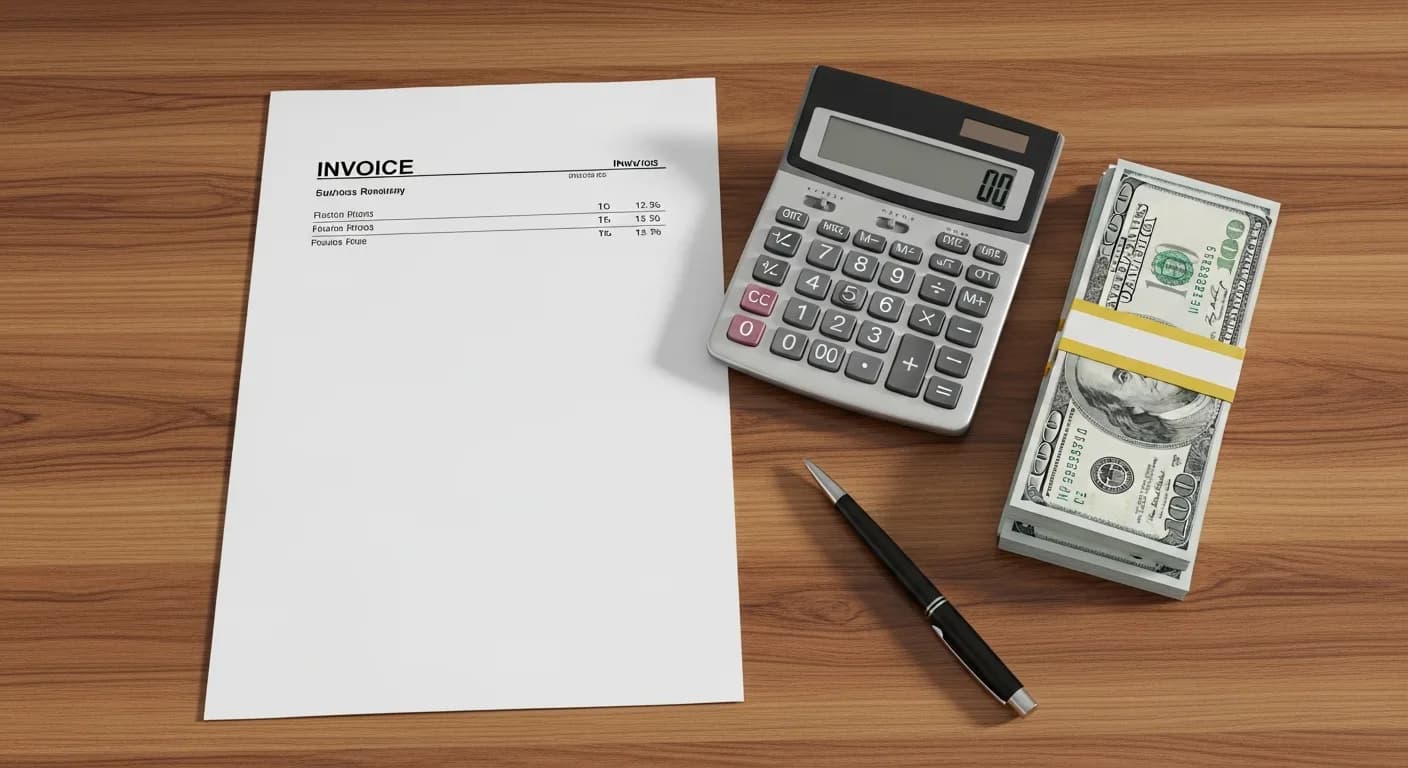
If you are budgeting for a security guard, the number that actually hits your invoice is the billed hourly rate — and for an unarmed contract officer in the US, that runs roughly $22–$35 per hour (2026 estimate). That single number decides whether a post costs you a few thousand a month or well into five figures, yet it hides a lot of moving parts. This guide breaks down exactly what is inside that rate, why it is higher than the wage the guard takes home, and how to read a quote so you don't accidentally buy a below-cost service that becomes your liability.
A licensed unarmed security guard in the US bills at about $22–$35 per hour in 2026. One officer covering a single 12-hour daily post costs roughly $8,000–$12,800 per month. The rate sits above the guard's own wage of $16–$25/hour because the provider carries payroll taxes, workers' comp, liability insurance, uniforms, supervision, and margin — a typical markup of about 1.6–1.8x on the wage.
What is actually inside the billed hourly rate
The bill rate is not the guard's paycheck. It is a fully loaded price that has to cover every cost of putting a trained, insured, replaceable officer on your site — and still leave the company a profit. When you pay $22–$35 an hour, that dollar is split across several buckets:
- Base wage — the largest slice, the $16–$25/hour the officer actually earns.
- Payroll taxes — the employer's share of Social Security, Medicare, and federal/state unemployment.
- Workers' compensation — priced by risk class; security is not cheap to insure.
- General and professional liability insurance — the coverage that protects you if something goes wrong on post.
- Uniforms and equipment — radios, flashlights, incident-reporting tools, PPE.
- Field supervision — the roving supervisor, scheduling, and management that keep a warm body from becoming a no-show.
- Overhead and margin — recruiting, licensing, training, back office, and the company's profit.
Strip out any one of these and you are looking at an unlicensed or under-insured operator, not a bargain. For a fuller breakdown of the components behind any guard price, see our guide on how much security costs.
Bill rate vs. the guard's wage — and why they differ
This is the single most useful concept for a buyer. The bill rate is what you pay the company per hour; the pay rate is what the officer earns. The gap between them — a markup of about 1.6–1.8x — is not pure profit. Most of it is the taxes, insurance, and supervision above. A guard paid $18/hour typically bills somewhere in the high-$20s to low-$30s once everything is loaded. If a provider quotes you a bill rate that is barely above a fair wage, they are almost certainly cutting insurance or misclassifying labor. We go deeper on this in our explainer on bill rate vs. pay rate.
What moves an unarmed rate up or down
Two sites in the same city can get very different quotes. The main levers:
- Shift timing — overnight, weekend, and holiday hours carry shift differentials and often overtime, pushing the rate toward the top of the range.
- Officer experience and skill — a seasoned officer, or one who needs specific certifications, commands more than an entry-level guard.
- Site risk — a quiet corporate lobby prices lower than a high-incident retail or construction site where insurance exposure is greater.
- Metro and cost of living — wages and workers' comp scale with the local labor market.
- Contract length and volume — a long-term contract or multiple posts earns a better per-hour rate than a one-week fill-in.
- Minimum-hour policies — many firms bill a four-hour or eight-hour minimum per shift, so short posts cost more per productive hour.
Regional variation
The $22–$35 range is a national baseline, not a promise for your ZIP code. High-cost metros run well above it: in markets like the San Francisco Bay Area, Seattle, or Manhattan, higher minimum wages, expensive workers' comp, and tight labor push both the guard's pay and the bill rate up. In lower-cost regions you may see quotes near the bottom of the range. Always benchmark against your own metro, and treat a quote from a national provider as a starting point to localize. Our security cost calculator lets you adjust for shift, coverage, and region to get a realistic number for your site.
Worked example: a single daytime lobby post for one month
Say you need one unarmed officer at a Class A office lobby, 12 hours a day, seven days a week — a common front-desk security arrangement. At an unarmed bill rate in the $22–$35 range, that single 12-hour daily post lands at roughly $8,000–$12,800 per month. Where you fall inside that band depends on the levers above: a low-risk daytime lobby in an average-cost metro sits toward the bottom; add weekend differentials, a higher-cost city, or a more experienced officer and you climb toward the top. Note this covers one officer's scheduled hours — it does not yet account for relief coverage on breaks or vacations, which we address below.
How to compare quotes — and spot a below-cost quote
When quotes come back, don't just pick the lowest number. Normalize them: confirm each is for the same weekly hours, the same post coverage, and the same scope of supervision and insurance. Then apply a floor test. For that single monthly post, anything under about $7,900/month cannot realistically cover a licensed provider's own loaded labor even at a $16/hour wage — which means the operator is likely underpaying, under-insuring, or misclassifying workers.
For a structured vetting checklist, see how to hire a security guard company, or skip the legwork and get quotes from pre-vetted licensed providers.
What's included vs. billed as an extra
The hourly rate usually covers the officer on post, standard uniform, basic equipment, and routine field supervision. Common line items that are billed on top of the base rate:
- Holiday and overtime hours — often billed at a premium multiple of the standard rate.
- Specialized equipment — a patrol vehicle, golf cart, or specialized surveillance gear.
- Additional supervision — a dedicated on-site account manager beyond the standard roving supervisor.
- Short-notice or fill-in coverage — expedited scheduling carries a surcharge.
Get the inclusions in writing. A clean scope of work prevents the "cheap rate, expensive invoice" surprise where extras quietly inflate the monthly total.
When one guard isn't enough
Buyers routinely under-scope coverage by assuming one officer equals round-the-clock protection. It doesn't. A single guard covers a single shift. Continuous 24/7 coverage of one post needs 2–4 officers once you account for shift rotation, breaks, relief, sick days, and vacation — so multiply your single-post estimate accordingly. Multiple entrances or floors mean multiple simultaneous posts, each priced on its own. Budget for the coverage you actually need in our breakdown of 24/7 security guard cost.
Finally, if your risk profile calls for a firearm, expect a step up: an armed upgrade adds roughly 1.35x over the unarmed rate to cover firearms licensing, additional training, and higher insurance. Compare the trade-offs in our guides to unarmed guard services and armed security, and see the full math in armed security guard cost.
Frequently asked questions
How much does an unarmed security guard cost per hour in 2026?+
Why is the bill rate higher than what the guard is paid?+
What does one security guard cost per month?+
How do I spot a below-cost security quote?+
How much more does armed security cost than unarmed?+
Share this guide