Healthcare is the most violent workplace in America — and a growing list of states now mandate a written violence-prevention plan. Here's how hospitals hire the right security, meet state WPV laws, and staff their highest-risk units.
No industry absorbs more workplace violence than healthcare. Emergency departments, behavioral-health units, and long-term-care floors put staff in daily contact with people in crisis, in pain, or under the influence — and the injury data reflects it. For hospital administrators, facilities directors, and risk managers, security is no longer an amenity or an after-hours patrol: it's a patient-safety function, a liability exposure, and — in a growing number of states — a legal mandate with a compliance deadline. This guide covers why healthcare is the most violent workplace in the country, what hospital security actually covers, how to staff the highest-risk units, what a real program costs to run, and how to meet the state workplace-violence laws now rolling out across the country.
Quick answer: Hospitals hire security to protect staff, patients, and visitors in a uniquely high-violence environment. A modern program layers officers (fixed posts at the ED and main entrances plus roving patrol), access control and visitor management, camera monitoring, weapons screening at high-risk entrances, and trained response to behavioral crises, infant-abduction alerts (Code Pink), and patient-custody situations. Where a state has a healthcare workplace-violence (WPV) law — California, Illinois, Texas, New York, and a growing list of others — a written prevention plan is mandatory; where none exists, OSHA's General Duty Clause still requires employers to protect workers from recognized hazards. Most hospital officers are unarmed and trained in de-escalation (IAHSS, CPI/MOAB); armed coverage and off-duty police are used selectively for the highest-risk posts. Budget roughly $190,000–$310,000 per year for one continuous (24/7) unarmed post, more for armed or off-duty-police coverage — a mid-size hospital program typically lands in the low seven figures.
Why healthcare is the most violent workplace in America
The federal data is stark. According to the U.S. Bureau of Labor Statistics, the healthcare and social-assistance sector recorded 41,960 nonfatal workplace-violence cases involving days away from work, job restriction, or transfer over 2021–2022 — 72.8% of all such cases in private industry. Those injuries occurred at an annualized rate of 14.2 cases per 10,000 full-time workers — roughly five times the rate for private industry overall, per the same BLS data.
An earlier BLS factsheet found that healthcare workers accounted for 73% of all nonfatal workplace injuries and illnesses due to violence in 2018, and that intentional violence against healthcare workers rose 63% between 2011 and 2018. Within healthcare, psychiatric aides post the highest violence-injury rate of any occupation the BLS tracks — an annualized 543.6 per 10,000, orders of magnitude above the private-industry baseline.
The reasons are structural, not incidental. Hospitals are open 24/7 and cannot turn anyone away. Emergency departments concentrate people in acute distress — intoxication, psychiatric crisis, withdrawal, grief, and the fallout of violent crime — often after long waits. Behavioral-health units house patients who may be involuntarily committed. Maternity floors hold newborns. Pharmacies and med rooms hold controlled substances. And the culture of care has long normalized assault as "part of the job," which means much of it goes unreported and unaddressed until a serious injury — or a lawsuit — forces the issue.
That last point matters financially. Even in states without a specific WPV statute, the federal OSHA General Duty Clause (Section 5(a)(1) of the OSH Act) requires employers to furnish a workplace "free from recognized hazards" — and OSHA has cited hospitals for failing to protect staff from patient and visitor violence. A serious, foreseeable assault on staff or a visitor can also expose a facility to negligence claims. Security spending, in other words, offsets both injury cost and legal exposure.
The cost of not spending: what violence does to the P&L
Before you weigh what security costs, weigh what it prevents. Workplace violence in healthcare is not an abstract risk — it carries hard costs in injuries, turnover, and lost clinical capacity that dwarf the security line item for many facilities.
- Clinician assault is routine, not rare. In the American College of Emergency Physicians' 2022 national poll of 2,712 emergency physicians, 55% said they had personally been physically assaulted in the ED (up from 49% in 2018), and one-third (33%) said an assault caused an injury. Two-thirds reported being assaulted in the past year alone. When your most expensive, hardest-to-replace clinicians are being injured at those rates, the cost surfaces as sick time, disability, and attrition.
- Days-away injuries are a direct cost. The 14.2-per-10,000 rate above is a DART figure — days away, restricted, or transferred. Each one is lost productive time, overtime backfill, and potential workers'-comp exposure.
- Turnover is the silent multiplier. Violence and the fear of it are consistently cited drivers of nurse burnout and departure, and recent nursing-workforce reports put the fully-loaded cost of replacing a single bedside RN well above $50,000. A program that keeps even a handful of experienced nurses from walking can pay for itself.
How to frame the ask internally: Pull your own OSHA 300 log, ED incident reports, and nursing-turnover data, then price the security program against the injury, backfill, and turnover costs it offsets. A written cost-of-violence case turns "security" from a grudge purchase into a documented risk-mitigation investment — and it's exactly the analysis a security consultant will help you build.
What hospital security actually covers
Effective healthcare security is a layered program, not a lone guard at the door. The core components:
- Fixed posts at the emergency department, main lobby, and behavioral-health entrances — the friction points where most incidents originate.
- Roving patrol covering parking structures, stairwells, loading docks, and remote clinic buildings, where staff are most isolated.
- Access control and visitor management — badging, visitor screening and passes, and after-hours lockdown that keeps public traffic out of clinical and pediatric areas.
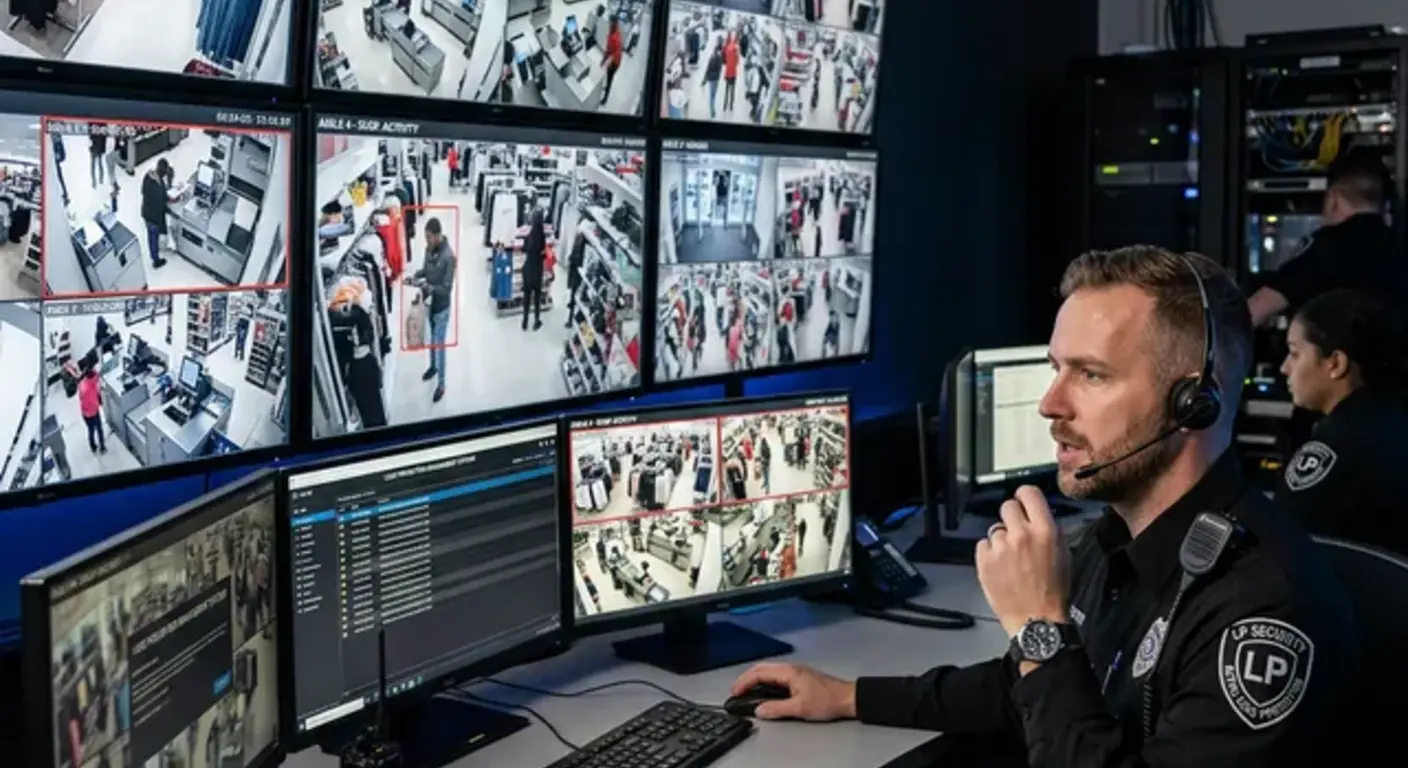
- Camera monitoring covering entrances, waiting rooms, corridors, med rooms, and infant units, watched live at high-risk hours and available as evidence.
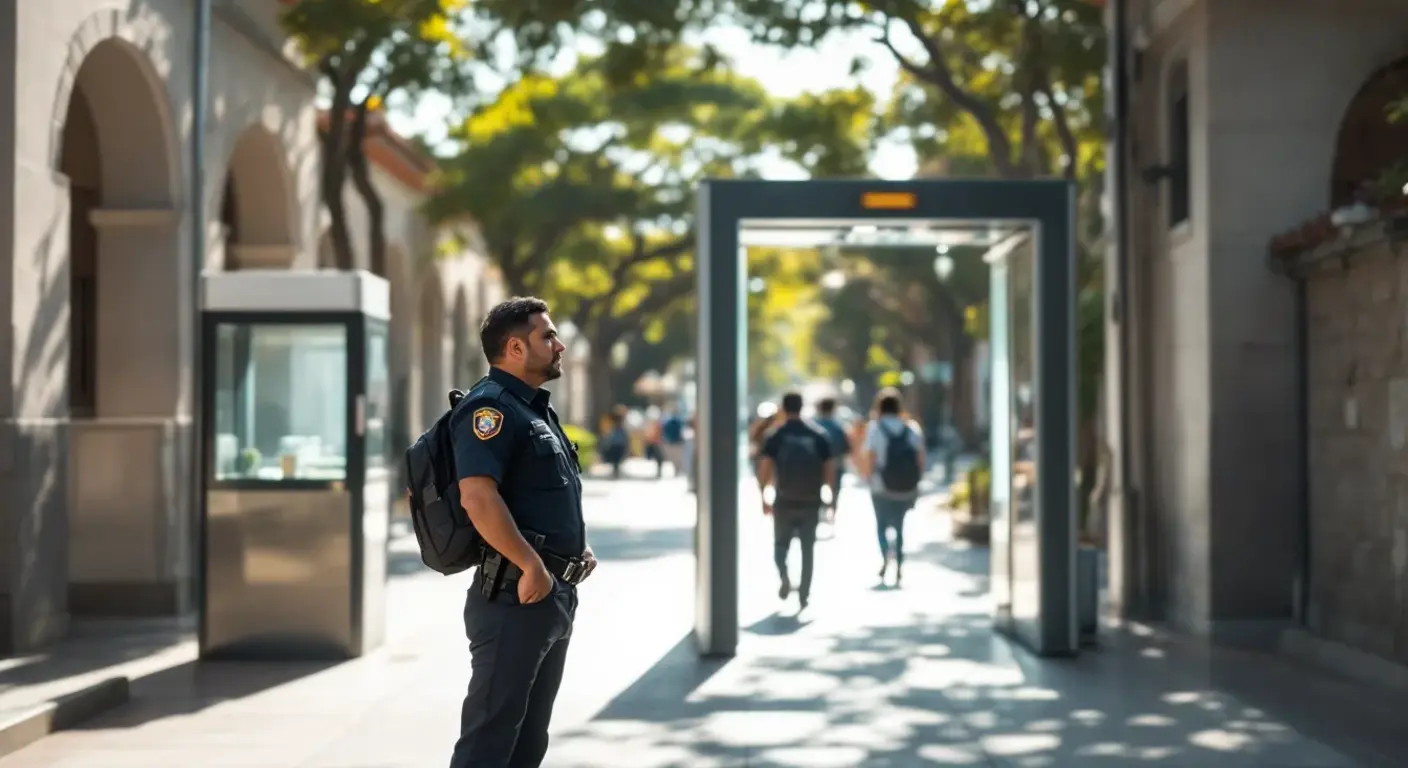
- Weapons screening at higher-acuity ED and main entrances — walk-through or handheld systems, staffed and paired with a written found-weapon protocol.
- Behavioral crisis response — trained de-escalation, standby support during patient restraints, and coordination with clinical staff.
- Emergency-code response — the security team's role in Code Silver (weapon/active threat), Code Pink (infant/child abduction), Code Gray (combative person), and evacuation.
The through-line is that officers must integrate with clinical operations. A hospital security officer isn't guarding an empty warehouse — they're de-escalating a frightened patient's family, standing by while nurses restrain a combative patient, and knowing when to call police versus handle it in-house. That blend of presence, judgment, and clinical fluency is what separates healthcare-experienced providers from generic guard companies. Many of the same principles apply to any large staffed facility — our guide to building a corporate security program covers the access-control and visitor-management backbone in depth.
The highest-risk units: ED, behavioral health, and maternity
Not every square foot of a hospital carries the same risk. Three environments drive the majority of serious incidents and deserve dedicated attention.
Emergency department
The ED is the single most violent area in most hospitals — the front door for intoxication, psychiatric emergencies, gang- and domestic-violence victims (and sometimes their assailants), and long, frustrating waits. Leading practice is a fixed, visible officer presence in or immediately adjacent to the ED at all times, weapons screening at triage in higher-acuity facilities, and controlled access between waiting and treatment areas. New York's 2025 workplace-violence law (detailed below) will require a dedicated off-duty officer or trained security presence in the ED at large-jurisdiction hospitals — a mandate that is phasing in through 2026–2027 rather than already in force.
A quieter, growing ED problem is behavioral boarding: psychiatric patients held for hours or days awaiting an inpatient bed, often in a hallway bay or a converted room. They need continuous observation and a de-escalation-trained officer within reach, not a floor nurse pulled off a full assignment — and they are a major driver of the assault numbers that make the ED the highest-risk unit in the building.
Weapons screening at the entrance
Weapons detection has moved from a big-city ED curiosity to a mainstream — and increasingly expected — capital and staffing decision. It deserves treatment on its own, not as a footnote.
- What the systems are. Options range from handheld metal-detector wands, to traditional walk-through metal detectors, to newer AI-assisted weapons-detection portals that let people walk through without emptying pockets. Portals cost more up front and carry a subscription; wands are cheap but slow and labor-intensive.
- Staffing is the real cost. A screening point is only as good as the officers running it. A single 24/7 walk-through lane typically needs two posts to keep throughput moving and to respond when a hit occurs — that's the dominant line item, not the hardware.
- False alarms will define the experience. Every wheelchair, oxygen tank, laptop, and belt buckle is a potential alert. Without a secondary-search protocol and enough staff to run it, lines back up, patients get angry (compounding the very violence you're screening for), and officers start waving people through — which is worse than no screening at all.
- Intermittent screening is theater. A detector that runs only on day shift, or only at the main entrance while three side doors stay open, provides deterrence value on paper and little in practice. Screening has to be paired with entrance consolidation and a written policy for what happens when a weapon is found.
Behavioral / psychiatric units
Psych units combine involuntary patients, ligature and elopement risks, and the highest assault rates in the building — psychiatric aides, again, top the BLS injury tables. Security's role here is specialized and demands more program design than any other unit:
- Environmental and ligature controls. Officers and security leadership should be part of environment-of-care rounds that check for ligature points, tamper-resistant fixtures, secured cords and cables, and contraband hiding spots. Physical design does more to prevent harm than any post ever will.
- Contraband and weapons search on admission. A structured search of patients and belongings at intake — for weapons, sharps, lighters, drugs, and ligature materials — is one of the highest-yield interventions on the unit, and security is frequently the trained party that supports or conducts it under policy.
- Elopement / AWOL protocols. Involuntary and at-risk patients who leave create immediate liability. Officers need clear roles in door alarms, unit lockdown, stairwell and exit coverage, camera review, and the escalation line to police and clinical leadership.
- 1:1 sitters vs. security officers. A clinical "sitter" providing continuous observation is not the same as a security post, and the two should not be conflated on the schedule. Security supports; it does not replace clinically ordered continuous observation.
- The behavioral emergency response team (BERT). Many systems run a BERT — a rapid multidisciplinary response to escalating behavioral crises before they become full restraints. Security is a defined member: providing presence, a show of force when de-escalation stalls, and physical support during a clinically directed restraint. Officers here need genuine crisis-intervention training (CPI, MOAB, or equivalent) far more than a firearm; restraint and takedown situations demand technique that protects the patient, not force that injures them. Standby support during clinical restraints is a common, appropriate role; independent physical intervention generally is not.
Maternity and pediatrics — Code Pink
Infant abduction is rare but catastrophic, and every accredited hospital plans for it. The scale is worth stating plainly: NCMEC has confirmed roughly 140 infant abductions from U.S. healthcare facilities in the six decades from 1964 through early 2025 (out of about 345 infant abductions overall) — and the healthcare share has fallen sharply since the 1990s, a decline widely credited to electronic infant-protection tagging, banded matching, and disciplined Code Pink drills. That's what "rare but catastrophic" actually means: a handful per decade nationwide, nearly all preventable with the right program.
Code Pink is the standard alert for a missing or abducted infant/child; the security response includes locking down exits, monitoring stairwells and parking areas, reviewing camera footage, and controlling the perimeter while staff account for the infant. Electronic infant-protection tags (RFID banding) integrate with this response, but the human piece — a trained team that can seal the building in minutes — is what makes the plan work. Note that most abductors impersonate staff or family to gain access, which is exactly why access control and staff-badging discipline on the maternity floor are frontline defenses, not afterthoughts.
In-custody and forensic patients
Hospitals routinely treat patients under law-enforcement or correctional custody — an arrestee brought in from the field, an inmate transferred for care, a prisoner on a psychiatric hold. These posts blur two chains of authority at once: the clinical team owns the patient's care while a guarding officer (or an accompanying deputy) owns the security perimeter. Good protocol keeps them distinct and written down: a dedicated post or 1:1 watch, weapon-retention discipline in a room full of grabbable objects and sharps, controlled visitor and phone access, documented handoffs at every shift change, and an unambiguous line on who may authorize the patient to leave. Officers assigned here need training in the specific legal and patient-rights constraints — an in-custody patient still has clinical rights, and an overstep is both a patient-safety event and a liability. When you vet a provider, confirm its officers have actually held forensic and behavioral-watch posts, not just guarded a lobby.
Hospital emergency codes: a security reference (and why they aren't standard)
Security is central to a hospital's emergency-code system, so anyone buying or managing the program should know the codes cold. One critical caveat first: hospital emergency codes are not nationally standardized. Only Code Blue (cardiac/respiratory arrest) and Code Red (fire) are reliably consistent from one facility to the next. Everything else varies — sometimes even between two hospitals in the same city. The push for standardization traces back to a 2000 California shooting in which staff moved toward the gunman because the announced code meant something different than they expected; at the time, California hospitals were using dozens of different codes for a single scenario.
The response has split into two camps. Maryland is the only state that legally mandates uniform color codes (under COMAR 10.07.01.33). Many other states — Arizona, Florida, North Carolina, Ohio, Wisconsin, and more — recommend a standard set. Texas went the other way in 2016, encouraging plain-language alerts ("Security alert, weapon, main lobby") and keeping only Code Blue as a color, and roughly two dozen state hospital associations now favor plain language. So treat the table below as the common meanings — always confirm your own facility's dictionary.
| Code (common usage) | Typical meaning | Security's role |
|---|---|---|
| Code Silver | Weapon, active shooter, or hostage situation | Lead lockdown, coordinate with police, direct Run-Hide-Fight, secure the perimeter |
| Code Pink | Infant abduction (often Code Adam for an older child) | Seal exits, monitor stairwells and lots, review cameras, control perimeter until the infant is accounted for |
| Code Adam | Missing or abducted child (older than infant) | Lockdown and organized search; assign officers to exits and vehicle areas |
| Code Amber | Child abduction alert (external / AMBER-linked at some facilities) | Support law-enforcement search, provide footage and witness coordination |
| Code Gray | Combative or aggressive person, no weapon (Maryland uses Gray for elopement — confirm locally) | Rapid response and de-escalation; stand by for a clinically directed restraint |
| Code Blue | Cardiac/respiratory arrest | Clear the path, control family and crowd, hold elevators for the response team |
| Code Red | Fire or smoke | Assist evacuation, control access, meet and direct the fire department |
Buyer takeaway: Because codes vary, a contract security officer who worked one hospital may carry the wrong meaning into yours. Insist that your provider trains every officer on your code dictionary at orientation and re-drills it — a Code Gray habit from a previous site is a liability during a Code Silver at yours.
Armed vs. unarmed vs. off-duty police
One of the most consequential decisions a hospital makes is how much force its security carries. There's no single right answer, and many systems blend all three models by post and by shift.
Unarmed officers handle the large majority of healthcare posts. In a setting full of patients, families, children, and people in crisis, a visible-but-unarmed presence with strong de-escalation skills reduces the odds that a confrontation escalates into a weapon situation. Unarmed is the default for lobbies, floors, behavioral health, and general patrol.
Armed officers are used selectively — high-crime EDs, cash/pharmacy escorts, and forensic (in-custody patient) situations — where the threat profile justifies it. The tradeoff is real: a firearm in a crowded ED or a psych unit is also a risk to be controlled, which is why armed coverage should be deliberate, well-trained, and posted where it belongs.
Off-duty law enforcement brings arrest authority and a strong deterrent, often stationed in the ED. It's the most expensive option and raises questions about use-of-force policy and liability, but for the highest-risk EDs it's common — and, under New York's new law, sometimes the explicit standard.
For a fuller breakdown of the tradeoffs — deterrence, liability, cost, and training — see our guide to armed vs. unarmed security guards and our overview of armed security services. The right mix is a risk decision a security consultant can help you model against your actual incident data.
What hospital security actually costs
Hospital security is billed the way all contract guarding is billed: an hourly bill rate per officer that bundles the guard's wage, payroll taxes, insurance, training, supervision, uniforms, and the provider's margin. Healthcare posts sit at the higher end of the guarding market because the environment demands experienced, de-escalation-trained officers, not entry-level bodies. Use these 2026 estimate ranges to model a budget — they are planning figures, not quotes, and your market, acuity, and volume move them.
| Post type | Typical bill rate | One continuous 24/7 post (8,760 hrs/yr) |
|---|---|---|
| Unarmed officer | $22–$35 / hr | ~$193,000 – $307,000 / yr |
| Armed officer | $30–$48 / hr | ~$263,000 – $420,000 / yr |
| Off-duty police officer | ~$40–$100+ / hr | ~$350,000 – $880,000+ / yr |
Two things drive the total. First, coverage hours: a post staffed only 16 hours a day (day and evening peaks) runs about 5,840 hours a year — roughly two-thirds the cost of a round-the-clock post. Second, post count: security programs are priced per post, and a hospital runs several simultaneously.
Worked example: a mid-size (~250-bed) hospital
Take the five-post program described throughout this guide — a common footprint for a mid-size acute-care hospital:
- ED officer, 24/7, armed (highest-acuity post): ~$263,000 – $420,000/yr. Swap in off-duty police and this line alone can exceed $700,000.
- Main entrance / lobby, 24/7, unarmed: ~$193,000 – $307,000/yr
- Behavioral-health post, 24/7, unarmed: ~$193,000 – $307,000/yr
- Roving patrol, 24/7, unarmed: ~$193,000 – $307,000/yr
- Second ED / triage-and-screening officer, 16 hrs/day, unarmed: ~$128,000 – $204,000/yr
Program total: roughly $970,000 to $1.55 million per year in contract-officer labor — the "high six figures to low seven figures" you'll hear from providers, now with the math behind it. That figure is guarding labor only. Add capital and recurring costs for the technology layer: a CCTV build-out commonly runs $1,000–$5,000 for a small system and $150–$500 per camera for a large one, with monitoring around $30–$200 per camera per month; weapons-detection portals add hardware plus subscription; and access-control, panic buttons, and infant-protection tagging carry their own line items. A larger academic medical center with a dozen-plus posts and full technology scales well into seven figures.
Where to cut without cutting safety: Not every post needs to be armed or 24/7. Model your actual incident data by hour and location, put your most-trained (and most expensive) officers where the assaults happen, and use unarmed de-escalation coverage everywhere else. Paying off-duty-police rates for a quiet overnight lobby post is the most common way hospitals overspend.
State workplace-violence laws hospitals must meet
A patchwork of state laws now requires hospitals to run formal workplace-violence prevention programs — and several carry hard deadlines. Even where no state statute applies, the OSHA General Duty Clause and Joint Commission standards (whose workplace-violence-prevention requirements took effect January 1, 2022) still obligate accredited hospitals to assess and mitigate the hazard.
| Jurisdiction | Authority | Core requirement & timing |
|---|---|---|
| California | Cal/OSHA healthcare WPV standard (Title 8 §3342) | Written WPV prevention plan, logs, training, and annual review — in force for years; the model many states copy |
| Illinois | Public Act 100-1051 | Requires healthcare WPV prevention programs and training |
| Texas | SB 240 | Hospitals and other facilities had to adopt WPV prevention plans and committees by Sept. 1, 2024 |
| New York | S5294-B (signed Dec. 2025) | ED off-duty officer / trained security presence at 1M+ population hospitals; WPV programs and annual assessments phasing in — effective ~280 days after enactment (~Sept. 2026), programs due within 12 months after (~Sept. 2027), annual assessments beginning Jan. 1, 2027 |
| All accredited hospitals | Joint Commission & OSHA General Duty Clause | WPV-prevention standards effective Jan. 1, 2022; General Duty Clause requires protection from recognized hazards nationwide |
New York's law is the newest and the most prescriptive on staffing. Note the phase-in: despite being signed in December 2025, its ED-coverage mandate is not yet operative — hospitals in covered jurisdictions have until roughly September 2026 for the effective date and about a year beyond that to stand up full programs. If you operate in New York, the time to line up compliant ED coverage is now, before the deadline compresses the market.
Restraint and patient custody are clinical acts, not security calls
Security officers frequently assist during patient restraints and stand guard over in-custody or behavioral-health patients — but restraint of a patient is a clinically directed intervention governed by hospital policy, patient-rights rules, and (for many facilities) accreditation standards. Officers should support the clinical team, document their role, and never initiate or extend a restraint on their own judgment. Getting this line wrong is simultaneously a patient-safety event, an accreditation finding, and a lawsuit — which is why healthcare-experienced providers train to it explicitly.
Finding the right healthcare security partner
The gap between a healthcare-experienced provider and a generic guard company is wide, and it shows up on the worst day, not the average one. When you evaluate firms, weigh:
- Documented healthcare experience — real ED, behavioral-health, forensic-watch, and Code Pink post history, not just "we have hospital clients."
- Training depth — IAHSS certification pathways, CPI or MOAB de-escalation, and BERT participation, verified per officer at your site.
- Regulatory fluency — the firm should already know your state's WPV law and Joint Commission expectations and help you evidence compliance.
- Turnover and supervision — high officer turnover erodes every protection above; ask for retention numbers and on-site supervision ratios.
Because healthcare security is intensely local — officers must know your codes, your police relationships, and your patient population — start with providers that actively staff your metro. Compare healthcare-security firms in major markets such as Los Angeles, Chicago, and New York — the last being ground zero for the newest and strictest ED-staffing mandate covered above. For a full breakdown of coverage models and pricing, see our overviews of armed security services and armed vs. unarmed guards.
Frequently asked questions
How much does hospital security cost per year?+
Is hospital security legally required?+
Should hospital security officers be armed?+
What is a Code Pink and how common is infant abduction?+
Which hospital unit has the highest risk of violence?+
Share this guide
Sources
- NY State Senate Bill 2025-S5294B (full text, effective date)
- Ogletree: New York Enacts Mandatory Workplace Violence Prevention Programs for Healthcare Facilities
- 2022 ACEP Emergency Department Violence Poll Results
- NCMEC — Infant Abductions
- Hospital emergency codes (standardization; Maryland mandate; Texas plain language)
- Md. Code Regs. 10.07.01.33 — Uniform Emergency Codes