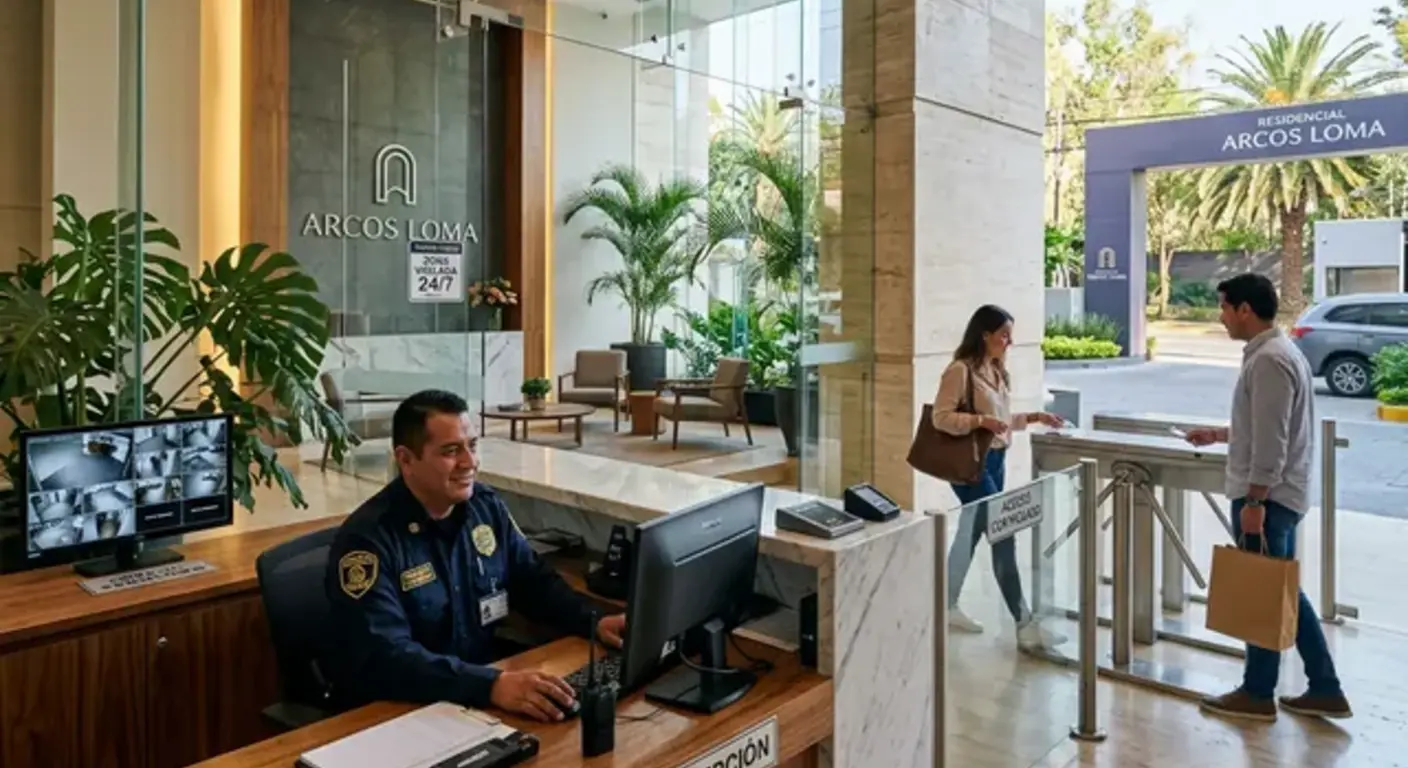
For operators and managers, apartment security is a business-risk decision, not an amenity. Here's how the models compare, what 'adequate security' means under a negligent-security lens, and how to build a defensible, documented program.
For a multifamily operator, security is not an amenity you add to a marketing sheet — it is a business-risk decision that sits at the intersection of resident safety, insurability, and litigation exposure. When a violent crime happens on a property with a documented history of similar incidents, the question a court, an insurer, and your legal team will all ask is the same: did the owner or manager provide reasonable security under the circumstances? This guide is written for the people who answer that question — property managers, owner-operators, REIT asset managers, and HOA boards acting as operators — and it walks through the security models, what "adequate security" actually means, how a documented program protects both residents and your balance sheet, and how to build something you can defend. (If you're a resident or a homeowner association evaluating community security as a neighbor rather than an operator, our residential and HOA security guide is written for that audience instead.)
Quick answer: Multifamily security is a premises-liability decision. Owners and managers generally owe residents and their guests a duty of reasonable care against foreseeable criminal acts by third parties — and how "foreseeable" is measured varies by state. The practical models are courtesy officer, contract mobile patrol, static posted guard, and remote/virtual guard, in ascending order of cost and on-site response. In rough 2026 terms: a courtesy officer costs a rent concession; remote/virtual guarding runs a low recurring fee; mobile patrol runs $600–$2,500 per property per month; a posted 12-hour guard runs roughly $8,000–$12,800/month; and 24/7 posted coverage (2–4 officers) runs roughly $16,000–$25,600/month. Whichever you choose, the defense is the same: a program that matches the property's actual risk and is documented in timestamped reports. Get quotes for your property.
Why security is a risk decision, not an amenity
On the leasing side, security reads like a perk — gated access, cameras at the mailroom, a patrol car at night. On the ownership side, it is a control against a specific and expensive exposure: negligent-security litigation. When a tenant, a guest, or a visitor is harmed by a criminal act on the property, plaintiffs frequently argue that the owner or manager failed to provide the security a reasonable operator would have provided given what the property knew about its own risk. That is not a claim about the crime itself — the criminal is a third party — it is a claim about the premises and whether its condition and safeguards were reasonable.
This reframes every security decision. You are not buying presence for its own sake; you are calibrating safeguards to the property's risk profile so that, if something happens, the program you ran was a reasonable one. Under-investing at a high-crime property is an obvious exposure. But over-investing blindly is also a mistake: it burns NOI without necessarily addressing the specific, foreseeable risks your property actually faces. The goal is a program that is proportionate and documented, not maximal.
Premises liability and the "foreseeability" standard
Premises liability is the body of law that governs when a property owner or possessor is responsible for harm that occurs on their property. In the security context, the relevant sub-theory is often called negligent security: the idea that an owner or manager breached a duty of reasonable care by failing to protect people on the property from a foreseeable criminal act by a third party.
The key word is foreseeable, and this is where operators most often misunderstand their exposure. Courts do not hold owners responsible for every conceivable crime — a landlord is generally not an insurer of resident safety. Liability typically attaches only when the criminal act was foreseeable and the owner failed to take reasonable measures against it.
How foreseeability is measured varies significantly by state, and operators with property in multiple states should not assume one national rule. In broad terms, courts have used approaches such as:
- A prior-similar-incidents approach, which looks primarily at whether comparable crimes had occurred on or near the property before, putting the owner on notice.
- A totality-of-the-circumstances approach, which weighs a broader set of factors — the nature of the property, the surrounding area's crime conditions, the location and design, and prior incidents — rather than requiring a near-identical prior crime.
- A balancing approach, which weighs the foreseeability and gravity of the harm against the burden of the security measures that would have prevented it.
Because the standard, the burden of proof, and even the availability of the claim differ by jurisdiction, the operational takeaway is not to memorize a rule — it is to treat notice seriously. Once your property is on notice of a pattern of crime, the reasonableness of your response becomes the whole game, and how you respond (and how you record it) is what a defense is built on. Verify the specific standard in each state where you operate with local counsel; do not port a policy written for one state to another without review.
Notice is the trigger — inaction is the exposure
The most dangerous posture is not "we had no security." It is "we knew and did nothing documented about it." Once a property is on notice of a recurring hazard — repeated break-ins in a garage, a pattern of assaults in a poorly lit breezeway, a broken perimeter gate reported for weeks — an operator that fails to respond reasonably has the weakest possible position if litigation follows.
Do not treat resident complaints, incident reports, and local crime data as noise. They are the record of what your property knew, and reasonable, documented action on them is your best protection.
What "notice ignored" actually costs. The clearest cautionary tale is the broken gate. In a widely cited Florida case, two siblings were fatally shot in a gated apartment community whose security gate had a documented history of being broken and unrepaired. A jury found the owner-operator negligent for failing to maintain the gate and returned a $4.5 million verdict; after a reversal on appeal, the state supreme court ultimately upheld it. Similar apartment-shooting cases where gates were found broken or a previously contracted patrol had been quietly terminated have driven multimillion-dollar settlements — commonly in the $4.5M–$8.6M range, with catastrophic-injury matters reaching far higher. Industry analyses put the median apartment negligent-security payout around $1.5M at trial and $1.7M in settlement. The recurring fact pattern is not exotic: a known deficiency, a paper trail proving the owner knew, and no documented repair. The security line item that would have prevented it is almost always a rounding error against the judgment.
What "adequate security" actually means
There is no universal checklist that guarantees "adequate security," because adequacy is measured against your property's risk. But across negligent-security matters, the same categories of safeguard recur, and a reasonable operator can work through them deliberately:
- Lighting. Functional, maintained lighting at entrances, parking areas, walkways, stairwells, and breezeways. Burned-out lighting at a property with prior incidents is one of the most common allegations.
- Access control. Working perimeter gates, secured entry doors, functioning locks on units and common areas, and controlled access to garages and amenity spaces. A gate that is broken and known to be broken is a recurring theme.
- Surveillance. Cameras positioned to cover entries, parking, mail areas, and common spaces — and, critically, actually recording and retaining footage. See our alarm monitoring options and the alarm monitoring guide.
- Physical presence. Where the risk warrants it, a courtesy officer, a contract patrol, or a posted guard providing deterrence and response.
- Maintenance and responsiveness. A closed-loop process for fixing reported deficiencies — locks, gates, lighting, doors — and a record showing the loop actually closed.
- Response to known problems. Escalating patrols, adding lighting, coordinating with local police, or issuing notices when a pattern emerges.
"Adequate" is the intersection of these safeguards with your property's foreseeable risk. A low-incident suburban garden community and a high-turnover urban mid-rise with a documented crime history do not need the same program — and the reasonableness of each is judged against its own circumstances.
Choosing a security model
The four common models trade off cost against on-site response and deterrence. Most operators end up with a hybrid — for example, a nightly roving patrol backed by access control and cameras, with a posted guard only at a flagship or high-risk asset.
Courtesy officer on-site
A courtesy officer is typically an off-duty or moonlighting law-enforcement officer, or a resident in a security-adjacent role, who lives on or near the property — often in exchange for reduced or free rent — and provides a visible presence and after-hours point of contact. The appeal is cost and the deterrent value of a marked vehicle or a known presence.
The risk is role ambiguity. A courtesy officer is not a substitute for a comprehensive program, and the arrangement raises questions that vary by jurisdiction: whether the person is an employee, an independent contractor, or a tenant with a concession; how their off-duty conduct is treated; and what duties they are actually authorized to perform. The employment classification and liability treatment of courtesy officers vary by state and by the specifics of the arrangement, and getting it wrong can create exposure rather than reduce it.
If you use a courtesy officer, define the role, duties, hours, and limits in writing, confirm the classification and insurance treatment with counsel, and do not market the person as "security" if their actual role is narrower than that word implies. "Courtesy officer" on a leasing flyer can itself become evidence of a promise you didn't keep.
Contract mobile / roving patrol
A licensed security company runs marked-vehicle patrols across the property on a schedule — checking gates, lighting, parking, and common areas, and responding to calls. Roving patrol covers a lot of ground for far fewer hours than a posted guard, which makes it the workhorse for many garden and mid-density communities, typically $600–$2,500 per property per month depending on visit frequency and property size.
Its underrated advantage for operators is evidence: professional patrols produce timestamped activity logs, GPS-verified checkpoints, and photo-backed incident reports that document exactly what was patrolled and when. That record is precisely what demonstrates a reasonable, active response to known risk. See our mobile patrol service and the mobile patrol guide. The trade-off is the gap between passes — a patrol is not continuous presence, so predictable schedules and thin coverage can leave windows. Vary the timing so the schedule can't be memorized by anyone watching the property.
Static / posted guard
A stationed officer holds a fixed post — a gate, a lobby, an amenity entrance — providing continuous presence, access control, and the fastest on-site response. This is the strongest deterrent and the strongest response at a single point, and it is what a high-risk asset with a documented history may reasonably require.
It is also the most expensive model by a wide margin. A single posted 12-hour unarmed guard runs roughly $8,000–$12,800/month; covering a post around the clock takes 2–4 officers and runs roughly $16,000–$25,600/month unarmed (more if the post is armed). Because a continuously staffed post is a full labor line, static coverage is usually reserved for the highest-risk assets or specific high-traffic points, often combined with patrol elsewhere on the property. For a fuller breakdown, see How much does a security guard cost?
Remote / virtual guard
Remote operators monitor the property through cameras, sensors, and intercoms from a central station — verifying access, issuing live voice warnings through speakers, and dispatching police or a patrol when something is detected. Virtual guarding costs a fraction of a posted officer — typically a low recurring monthly fee that scales with camera count and monitored hours — and produces excellent footage and detection, with live audio talk-down as a genuine deterrent.
For operators, the practical questions go beyond price, and you should press vendors on them:
- Response SLA. What is the guaranteed time from event detection to a live operator engaging — and is it contractual? A monitoring center that "gets to alarms when it can" is very different from one that commits to a response window in seconds.
- Talk-down and police escalation. How does live talk-down interact with dispatch? Many jurisdictions treat operator-verified events as priority responses, while unverified alarms can be deprioritized or carry false-alarm penalties — verified monitoring is part of what you're buying.
- False-alarm handling. How does the system filter wind, wildlife, headlights, and residents so operators aren't desensitized? AI-assisted analytics plus human verification is the current standard; ask for false-positive rates.
- Bandwidth and failover. What happens on an internet or power outage — is there cellular failover and local recording so the "eyes" don't simply go dark during the exact window an intruder would exploit?
Its limit is physical: a remote operator cannot intervene on the ground, so it is strongest as a detection-and-documentation layer paired with a patrol or police response rather than as a standalone answer at a property that genuinely needs a human on site.
Model comparison — with dollar anchors
Use these as 2026 planning ranges, not quotes. Actual pricing depends on market, property size, hours, and whether posts are armed. Request quotes to price your specific property.
| Model | On-site response | Deterrent value | Typical 2026 cost | Best fit |
|---|---|---|---|---|
| Courtesy officer | Limited / after-hours point of contact | Moderate (marked presence) | Rent concession (reduced/free unit) | Low-to-moderate-risk communities wanting a visible presence |
| Remote / virtual guard | None on-ground; dispatches police/patrol | Moderate–high (talk-down) | Low recurring monthly fee (scales with cameras/hours); CCTV install $1,000–$5,000 | Detection + documentation layer; after-hours coverage |
| Mobile / roving patrol | Intermittent (gaps between passes) | Moderate–high | $600–$2,500 / property / month | Garden & mid-density communities; the common workhorse |
| Static posted guard (12h) | Continuous at one point; fastest | Highest at that point | ~$8,000–$12,800 / month (unarmed) | High-traffic entry or single high-risk point |
| Static posted guard (24/7) | Continuous, all hours | Highest | ~$16,000–$25,600 / month (2–4 officers, unarmed) | High-risk assets with a documented crime history |
Two worked budgets: matching spend to risk grade
The "match the model to the risk" framework is abstract until you attach numbers to it. Here are two archetypes that bracket most of the multifamily market. These are illustrative 2026 order-of-magnitude programs, not quotes.
Archetype A — 200-unit suburban garden community, low incident history
The goal here is a reasonable, well-documented baseline, not a guard force:
- Access control + LED lighting maintenance: working gates, secured entries, and a standing relamp/repair program. Budget a few thousand dollars a year in upkeep on top of any capital.
- Recorded cameras at entries, mail, and parking: one-time install roughly $3,000–$8,000 (at $150–$500/camera across multiple clusters), plus monitoring at $30–$200/month.
- As-needed / few-nights-a-week mobile patrol: a modest schedule at the low end of the range, roughly $800–$1,500/month → about $10,000–$18,000/year.
Order of magnitude: roughly $20,000–$40,000/year in ongoing program cost, plus one-time hardware. For a 200-unit asset that pencils out to only a few dollars per unit per month — an easy reasonableness story to tell an underwriter or a jury.
Archetype B — high-risk urban mid-rise, on notice of prior incidents
Once a property is on notice, the reasonable program escalates sharply:
- Static lobby/gate post, 12 hours (overnight + evening): ~$8,000–$12,800/month → about $96,000–$154,000/year. A 24/7 post roughly doubles that line to $192,000–$307,000/year.
- Nightly mobile patrol of garage, breezeways, and perimeter: ~$1,500–$2,500/month → about $18,000–$30,000/year.
- Monitored cameras with talk-down: $1,000–$5,000 install plus a low recurring monitoring fee.
Order of magnitude: roughly $120,000–$190,000/year with a 12-hour post — and north of $300,000/year if the post runs around the clock.
The jump from Archetype A to B is not a rounding error — it's roughly a 5x–10x step. That's the point: the framework isn't "spend more everywhere," it's "spend to the grade of foreseeable risk this specific asset carries, and document why." A $150,000 annual program at a property with a documented shooting history is proportionate; the same spend at a quiet suburban asset is burned NOI.
Package theft, amenities, and the technology layer
Physical presence and access control are the liability spine of a program, but the highest-frequency resident pain points are often technological — and a 2026 guide that stops at guards and gates is incomplete.
Parcel theft — the No. 1 modern resident complaint
Package theft has become the most common day-to-day security grievance in multifamily housing, and the data explains why: apartment residents are roughly 3.5 times more likely to have a package stolen than single-family homeowners, because shared entryways and communal mail areas concentrate deliveries in one accessible place. Tens of millions of packages are stolen nationally each year, and even secured buildings aren't immune — porch piracy simply migrates to the lobby.
The practical fixes:
- Secure parcel rooms or smart lockers: access-controlled rooms or carrier-agnostic locker banks that log every deposit and pickup. Beyond cutting theft, they double as a leasing amenity that can support a modest rent premium.
- Camera coverage on the delivery zone: the mail/parcel area is one of the highest-value camera positions in the whole property, both for deterrence and for resolving the disputes that generate the most staff time.
- Delivery-management policy: clear rules on where carriers may leave items and how residents are notified reduce the "package sat in the open lobby for six hours" scenario.
Amenity liability — pools, gyms, garages, dog parks
Amenity spaces are a distinct and recurring exposure. Pools carry drowning and after-hours-access risk; gyms carry injury and unsupervised-equipment risk; garages are a top location for vehicle break-ins and assaults; even dog parks generate incidents. These spaces show up in both negligent-security and general premises-liability claims. Reasonable controls include:
- Amenity-specific access control — fob or mobile-credential entry to pools, gyms, and garages, with logs that show who entered and when.
- Posted rules and clear signage — hours, "no lifeguard on duty," capacity, and use restrictions. Signage is cheap and is repeatedly load-bearing in defense.
- Enforced after-hours lockout — automated gate/door schedules so the pool actually locks at close, plus a record proving the lockout worked. An amenity that is "closed" on paper but physically open is the worst of both worlds.
Smart access and license-plate recognition
Two technologies are becoming table stakes at the mid and upper end of the market. Smart access / mobile credentials replace copied keys and lost fobs with app-based, instantly revocable access — which matters enormously at turnover and when a restraining order or a terminated employee is involved — and they generate an audit trail. License-plate recognition (LPR) at garage and gate entries deters and documents vehicle-related crime and helps distinguish residents from outside traffic. Both feed the same evidentiary record that everything else in this guide is built on.
How your security program affects your own insurance
The opening thesis named three exposures — resident safety, insurability, and litigation. Insurability is the one operators most often overlook, and in 2026 it has real teeth. Multifamily insurance costs have risen dramatically in recent years, and the pressure has shifted toward liability. Crucially, a documented security program affects not just whether you win a lawsuit but whether you can get affordable coverage at all:
- Crime scores can gate coverage. Carriers increasingly price — and sometimes decline — multifamily risk using third-party neighborhood crime scores. A high score can raise premiums or, at the extreme, make coverage hard to place. A demonstrable security program is part of how you argue your property is better-managed than its zip code.
- Liability coverage has tightened. Much multifamily general-liability capacity has moved to the surplus-lines market, where limits are lower and where assault & battery (A&B) and sexual abuse & molestation (SAM) coverage is often sub-limited or excluded — even though agency lenders (Fannie Mae, Freddie Mac) may require it. That gap is exactly the exposure a negligent-security claim lands in.
- Security and documentation improve insurability. Underwriters reward monitored systems, working access control, proactive maintenance, and consistent documentation; deferred repairs, weak access control, and inconsistent records cut the other way. Modern monitoring/access technology can earn premium credits, and a clean, well-documented loss-prevention story materially helps renewal terms.
There is also a habitability dimension: in many states, security-related conditions (working locks, functioning gates, adequate lighting) intersect with the implied warranty of habitability, so a chronically broken gate can be both a liability fact and a habitability breach. Treat your security program as an underwriting and habitability asset, not just a safety line item — and make sure your COI/additional-insured requirements for any contracted guard vendor are in place so their coverage backstops yours.
Documentation: the retention schedule that wins cases
Every section of this guide comes back to the record. But "keep a retention schedule" is useless without numbers, and footage that has already been overwritten is the single most common self-inflicted wound in negligent-security defense. Adopt concrete defaults, confirm them against the statute of limitations in each state you operate, and — critically — preserve everything the moment you're on notice of a potential claim (a litigation hold overrides normal deletion).
| Record type | Suggested default retention | Why |
|---|---|---|
| Camera / CCTV footage | 30–90 days (longer where claims surface slowly or the limitations period is long) | Many claims aren't reported for weeks; 7-day overwrite loops routinely destroy the only evidence |
| Patrol / DAR activity logs | 2+ years archived | Proves an active, reasonable response over time — the core of the defense |
| Incident reports | Through the applicable statute of limitations (often 2+ years) | Establishes what the property knew and when — the "notice" record |
| Maintenance / work-order tickets | Tied to each reported deficiency, retained with the related incident record | Shows the closed loop: reported → fixed → verified |
| Resident complaints & crime-data reviews | 2+ years | The paper trail of foreseeability and your response to it |
The two documents most likely to decide a case are the work-order history (did the broken gate get fixed, and how fast?) and the camera footage retention window (does footage still exist when the claim finally lands?). Get those two right before anything else.
Building a defensible hybrid program
Most well-run properties don't pick a single model — they layer them to the risk grade. A practical sequence:
- Baseline for every asset: maintained lighting, working access control, recorded cameras with a real retention window, secure parcel handling, and a closed-loop maintenance process.
- Add detection where you can't afford presence: remote/virtual monitoring with talk-down and a contractual response SLA extends "eyes" without a full labor line.
- Add patrol for moving coverage: a mobile patrol on a varied schedule for garages, breezeways, and perimeter — with GPS-verified logs.
- Add a posted guard only where the grade demands it: a high-traffic entry or a high-risk asset on notice, where continuous on-site response is the reasonable answer.
Then document all of it, retain it on schedule, and revisit the program whenever notice changes — a new incident pattern, a nearby crime spike, or a resident-complaint trend should trigger a documented reassessment, not a shrug. That loop — assess risk, deploy proportionate safeguards, document, reassess — is simultaneously the best thing for residents, the best story for your insurer, and the strongest defense if a claim ever comes. Get matched with licensed providers to build it for your property.
Frequently asked questions
How much does security cost for an apartment community in 2026?+
What is negligent security and when is an apartment owner liable?+
How long should we keep security camera footage and patrol logs?+
Does a security program affect my property insurance, not just lawsuits?+
What's the biggest overlooked security issue in modern apartments?+
Share this guide
Sources
- Florida Supreme Court upholds $4.5M verdict against apartment owner for broken security gate (Gatehouse on the Green)
- Apartment negligent-security shooting settlements involving broken gates and terminated patrols ($8M / $8.6M)
- Negligent-security jury verdict and settlement statistics (median apartment payouts)
- 2025 Package Theft Annual Report — apartment residents ~3.5x more likely to be victimized (Security.org)
- USPS OIG / package-theft scale — 58 million packages stolen in 2024
- Property vs. violent crime timing — daytime dominates residential burglary; violent incidents cluster evening (ASU POP Center)
- Crime timing patterns: property crime daytime vs. violent crime evening/overnight (eufy summary of UCR data)
- Rising multifamily insurance costs and crime-score underwriting scrutiny (Matthews)
- Multifamily liability shifting to surplus market; A&B and SAM exclusions vs. agency-lender requirements (Marsh McLennan via Multifamily Dive)
- Security/monitoring technology and documentation as insurability and premium-credit factors