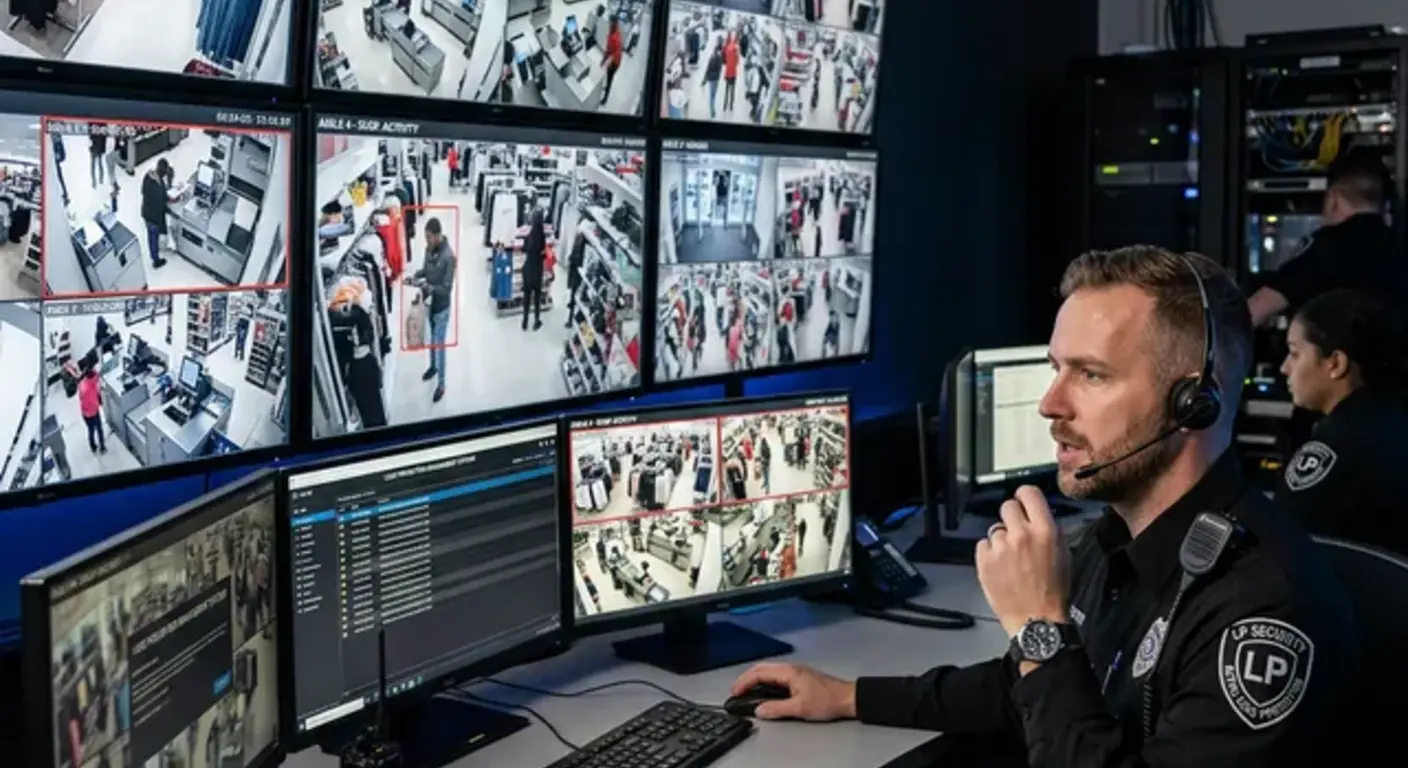
A hotel is one of the few businesses that invites the public to sleep on the premises — which makes security a core operating function, not an amenity. Here's how hotels hire it, what it costs, and the panic-button laws you have to meet.
A hotel is one of the few businesses that invites strangers to sleep on the premises around the clock. That single fact makes security a core operating function, not a line-item amenity: you are responsible for the safety of guests, employees, and property across a 24-hour cycle, in a building with dozens or hundreds of doors, corridors, and blind spots. This guide covers how hotels and resorts hire licensed security in 2026 — the guest-safety and liability stakes, the coverage models, seasonal and event staffing, what a program actually costs, the technology that supports it, and the growing patchwork of hotel-worker panic-button and anti-trafficking laws you now have to comply with.
Quick answer: Most hotels combine a uniformed presence (front-of-house and patrol), loss-prevention/asset protection, and — in a growing number of cities and states — a legally required employee panic-button system for staff who work alone in guest rooms. Uniformed guard coverage is usually priced by the hour — roughly $22–$35 an hour unarmed in most markets — and scaled by property size, season, and events. A single continuously staffed post (24/7/365) runs about $193,000–$307,000 a year. Beyond guards, hotels face negligent-security liability if a foreseeable crime harms a guest and reasonable precautions were missing, and a rising number of jurisdictions now mandate panic devices for housekeepers and other lone workers.
Why hotels need dedicated security
Hotels combine risk factors almost no other property has at once: 24/7 public access, transient occupants who can't be pre-screened, alcohol service, cash and high-value guest belongings, large parking areas, pools and event spaces, and employees who routinely enter occupied rooms alone. The threats run from the mundane to the severe — theft and fraud, intoxicated or disruptive guests, trespassers and loiterers, domestic incidents, property crime in the lot, and, in the worst cases, assaults on guests or staff. A capable security program is what lets a property stay welcoming and open while managing all of that quietly in the background.
Good hotel security is also invisible when it's working. The goal isn't a fortress; it's a calm, well-run property where the presence, the cameras, the access control, and the response plan are there when something goes wrong — and unnoticed when nothing does.
Guest safety and negligent-security liability
The legal stakes are the reason security belongs in the risk-management conversation, not just facilities. Under premises-liability law, a hotel owes its guests a duty of reasonable care — and that duty extends to protecting guests from foreseeable criminal acts by third parties. When a guest is assaulted, robbed, or harmed on the property and the hotel failed to take reasonable precautions against a risk it knew or should have known about, the hotel can face a negligent-security claim.
The exact test for "foreseeability" varies by state — some courts look at prior similar incidents on or near the property, others apply a broader totality of the circumstances standard that weighs crime in the area, the nature of the business, and other factors. Either way, the practical lesson is the same: the strength of a hotel's defense often comes down to what it did in advance. Adequate lighting, functioning locks and access control, working cameras, reasonable patrol coverage, a documented response plan, and prompt attention to known problems (a broken exterior door, a pattern of car break-ins, a guest complaint about a loiterer) are the measures that both prevent incidents and demonstrate reasonable care if one occurs.
Documentation is your defense. In a negligent-security claim, the hotel's own records are often the case. Timestamped patrol logs, incident reports, camera retention, maintenance tickets for security-related repairs, and evidence that you acted on prior complaints all show reasonable care. Their absence — gaps in patrol, cameras that weren't recording, a known hazard left unfixed — is what plaintiffs' attorneys build on. Treat security records as legal documents, and confirm any provider you hire keeps auditable logs.
Two practical points follow from how these claims are litigated. First, the duty is one of reasonable care, not a guarantee of safety — a hotel is not automatically liable every time a crime occurs on its property, only when it failed to do what a reasonably careful operator would have done against a foreseeable risk. Second, foreseeability builds over time: a property with a documented pattern of car break-ins, prior assaults, or a nearby crime problem is generally held to a higher standard than one with a clean history, because the risk is more clearly on notice. That is why acting on the first incident — adding lighting, extending patrol, fixing a broken gate — matters so much: it both reduces the next incident and reshapes the "should have known" analysis in the hotel's favor.
Loss prevention and asset protection
Beyond guest safety, hotels run a real loss-prevention operation. The targets are cash and receivables at the front desk and food-and-beverage outlets, guest property, hotel assets (linens, electronics, minibar stock, back-of-house equipment), and the fraud that hospitality attracts — chargeback and reservation scams, walkouts, and internal theft. A hotel security or asset-protection function watches for these patterns, works with department managers on cash-handling and inventory controls, investigates shortages, and supports the front desk on disputes. On larger or resort properties this is a standing role; on smaller ones it's folded into the general security and management team.
Loss prevention in a hotel is also uniquely tied to guest experience. Unlike a retail floor where a loss-prevention officer can confront a suspected shoplifter, a hotel is dealing with paying, often long-staying guests, so investigations have to be discreet and evidence-based — camera footage, access-control logs showing who entered a room and when, and careful documentation rather than confrontation. This is another argument for integrating the guard force with the technology stack: the access-control audit trail and camera retention are frequently what resolve a "missing property" dispute, distinguish a genuine theft from a misplacement, and protect the hotel from a false claim.
The internal-theft side deserves particular attention because it is often the largest and least visible loss channel in a hotel. Cash-handling controls at the front desk and food-and-beverage outlets (drawer counts, void and comp review, manager approvals for refunds and adjustments), inventory controls on high-shrink items (liquor, linens, electronics, and amenities), and access-control audit trails on storerooms and back-of-house doors are the everyday tools. The asset-protection function usually partners with finance and department heads on these controls rather than owning them outright, then uses camera and access-log review to investigate the anomalies the numbers surface — a recurring shortage on one shift, comps that don't reconcile, or after-hours entries to a stockroom that has no reason to be open.
Uniformed vs. plainclothes coverage
Hotels use both postures, often together. Uniformed officers provide visible deterrence and a clear point of contact — stationed at the lobby or entrance, patrolling floors and the perimeter, and responding to calls. Their visibility is the point: guests feel safer, and would-be offenders see that the property is watched. Plainclothes officers blend into the guest population and are used for loss prevention, surveillance of a specific problem, or discreet coverage of high-profile guests and events where a uniformed presence would be intrusive. Most properties lead with uniformed coverage and add plainclothes selectively.
Where plainclothes coverage actually earns its higher cost is in a handful of hotel-specific situations that a uniform would either scare off or disrupt:
- Food-and-beverage and bar theft. Skimming at the point of sale, over-pouring and comping to friends, and bartenders under-ringing rounds are hard to catch when the person watching is in uniform. A plainclothes officer sitting at the bar sees the register behavior and the cash flow in real time.
- Chronic-complaint rooms and floors. A room being used for drug activity, prostitution, or a running party generates repeat complaints. Discreet observation of the corridor and elevator traffic builds the pattern (and the documentation) needed to act, without tipping off the occupants.
- VIP, celebrity, and executive stays. High-profile guests often want protection that doesn't announce itself or draw a crowd to the lobby. Plainclothes officers — sometimes coordinated with the guest's own executive-protection detail — provide close coverage that reads as part of the guest population.
- Human-trafficking and exploitation surveillance. The behavioral signals of trafficking (covered in the checklist below) are observed, not confronted. Plainclothes officers can watch lobby, elevator, and parking-area movement patterns and support staff reporting without alerting a controller who is watching the front desk.
The uniformed-to-plainclothes ratio shifts sharply by property type. A limited- or select-service hotel is almost entirely uniformed (or uses no plainclothes at all) — the value is deterrence and after-hours response, and the property lacks the F&B and crowd volume that plainclothes work targets. A full-service urban hotel adds occasional plainclothes for loss prevention and VIP stays. A resort or casino runs the widest mix: a visible uniformed force for the floor, gaming areas, and events, layered with a substantial plainclothes and surveillance operation working theft, cheating, trafficking, and problem-guest patterns across a large footprint.
Coverage zones: where hotels concentrate security
Lobby and front entrance
The front door is the property's filter. A presence here deters trespassers, manages after-hours access, assists guests, and is the first responder to anything that starts in the public areas. Overnight, when the front desk is thinly staffed, a security presence at or near the entrance is especially valuable.
Guest floors and corridors
Patrol of guest floors addresses noise and party complaints, unauthorized access, propped stairwell doors, and welfare checks — and it's where a documented, timestamped patrol log directly supports both safety and your liability posture.
Pool, event, and amenity spaces
Pools, bars, ballrooms, and event spaces concentrate people, alcohol, and after-hours activity. Large functions — weddings, conferences, nightlife events — often need supplemental coverage; see our event security guide for how to staff those. Amenity areas also need access control so they're limited to registered guests.
Parking lots, garages, and perimeter
Parking areas are statistically where a lot of hotel property crime and confrontations happen, and they're a recurring theme in negligent-security claims. Lighting, camera coverage, and roving patrol of the lot and perimeter are high-value, relatively low-cost measures. A mobile patrol that sweeps the lot and exterior on a randomized schedule — logged each pass — covers a large footprint efficiently; our mobile patrol guide explains how that model works. Budget roughly $600–$2,500 per property per month for scheduled mobile patrol, depending on visit frequency and footprint.
Seasonal and event-driven staffing
Hotel security demand is rarely flat. Resorts swing with the season; convention hotels spike around large groups; urban properties see weekend and nightlife peaks; and any property hosting weddings, concerts, or corporate events needs coverage that scales for the night and stands down afterward. This is a major reason hotels favor contract security over a fixed in-house force: a good provider flexes coverage up for peak season and events and back down in the off-season, without the hotel carrying year-round headcount it doesn't always need. When you scope a contract, define the baseline coverage and a clear mechanism (and rate) for surge staffing so a busy weekend doesn't turn into a scramble.
In practice, most properties settle on a three-layer staffing model. A fixed baseline covers the posts and patrol you run every day of the year — typically an overnight presence plus lobby and perimeter coverage. A seasonal band scales that baseline up through peak months and back down in the off-season. And event surge is booked per function on top of both, typically at $35–$60 per guard per hour for short-notice event coverage.
What a hotel security program costs
Guard coverage is priced by the hour and billed to you at a rate that already includes the officer's $16–$25/hr wage plus payroll taxes, insurance, supervision, uniforms, and the provider's margin. In most U.S. markets in 2026, expect roughly $22–$35 per hour for unarmed officers and $30–$48 per hour for armed — hotels rarely need armed guards unless the location or a specific threat warrants it.
The number that matters for budgeting is what a continuously staffed post costs. A single post covered 24/7/365 is 8,760 hours a year. At the canonical unarmed rate, that is:
8,760 hrs × $22–$35/hr ≈ $193,000–$307,000 per year, per continuously staffed post.
That is why hotel security "runs well into six figures a year" — but the vague phrasing hides the real driver, which is simply how many posts you staff and for how many hours. A small worked example: a midscale property that runs one overnight post (11 p.m.–7 a.m., 8 hrs × 365 = 2,920 hrs) plus a weekend lobby post (16 hrs × 104 weekend days ≈ 1,664 hrs) is staffing about 4,584 hours a year — roughly $101,000–$160,000 at $22–$35/hr, before any event surge or technology. Add a second continuous 24/7 post and you are adding another ~$193,000–$307,000.
Estimated annual guard-program cost by property type
Use the table below as a planning tool, not a quote. Every figure is a 2026 estimate built from the canonical $22–$35/hr unarmed bill rate; armed posts, executive protection, and technology are separate line items covered elsewhere in this guide.
| Property type | Typical security posts | Annual staffed hours | Est. annual guard-program cost |
|---|---|---|---|
| Economy / limited-service (~50–100 rooms) | Overnight + weekend coverage, often part-time | ~2,000–5,000 | ~$45,000–$175,000 |
| Midscale / select-service (~100–200 rooms) | 1 continuous overnight post + weekend days | ~5,000–9,000 | ~$110,000–$315,000 |
| Full-service / urban (~200–400 rooms) | 24/7 single post + peak-hour second post | ~9,000–17,500 | ~$195,000–$615,000 |
| Resort / casino / convention (400+ rooms) | 3–6 posts, 24/7 + event surge | ~26,000–52,000+ | ~$570,000–$1.8M+ |
Two adjustments push a real number within (or above) these bands: armed posts add roughly a third to the hourly rate, and event surge at $35–$60/guard/hr is booked on top of the baseline. Off-duty police, sometimes used for high-risk events or a visible law-enforcement presence, run about $40–$100+ per hour.
Security technology: what the stack costs
Guards are the labor line; the technology stack is a separate, largely one-time capital cost plus recurring subscriptions. A hotel security program leans on four systems, and a buyer should budget each one explicitly rather than treating "cameras and access control" as an afterthought.
- CCTV / video surveillance. A modern IP camera system runs about $150–$500 per camera installed; a small-property package of 4–10 cameras lands around $1,000–$5,000, while a full-service or resort property covering every entrance, corridor, elevator, lot, and amenity can run well into five or six figures. Optional professional video monitoring adds roughly $30–$200 per camera per month.
- Access control. Electronic locks, key-card or mobile-credential readers, and the software that produces the audit trail are core to both loss prevention and liability defense. Budget roughly $1,000–$2,500 per controlled door installed, plus a platform subscription — the exact figure depends on how many back-of-house and amenity doors you bring under control beyond guest rooms.
- Alarm and intrusion monitoring. Professionally monitored alarm service for entrances, storerooms, and after-hours zones runs about $30–$200 per month, depending on the number of zones and response tier.
- Employee panic devices. Increasingly mandatory (see below) and quantified in the callout that follows.
What a panic-button system costs. Lone-worker panic systems have three cost components a buyer should size separately:
- Per-room / per-worker devices. Wearable or in-room devices run about $50–$150 each as one-time hardware, or are bundled into a managed subscription of roughly $10–$25 per room per month that includes the device, software, and support.
- Location infrastructure. Because the law requires the alert to signal the worker's exact location, most systems need a Bluetooth-beacon or Wi-Fi network throughout guest floors and back-of-house — a one-time install of roughly $50–$200 per floor/zone in beacons plus configuration.
- Alert routing + monitoring subscription. The platform routes an activation to the right responder in real time. This is the compliance-critical piece: in Los Angeles, hotels with more than 60 rooms must route alerts to a dedicated on-site security guard, while hotels with 60 or fewer may route to a trained manager or supervisor. Budget the recurring SaaS/monitoring fee inside the per-room subscription above.
Panic-button and lone-worker laws you must comply with
A hotel worker who cleans or services rooms alone is a lone worker, and a growing list of cities and states now require hotels to give those employees a panic device — plus training, signage, and a documented response protocol. Illinois (Hotel and Casino Employee Safety Act), Washington State, New Jersey, and cities including Chicago, Seattle, Miami Beach, Long Beach, West Hollywood, and Santa Monica all have versions of these requirements. The specifics — who is covered, how alerts must be routed, and what records you keep — vary by jurisdiction, so confirm the exact rule where you operate.
Los Angeles is the most commonly misread example, so it's worth getting right:
- Under LA's Hotel Worker Protection Ordinance (effective August 2022), the panic-button / personal-security-device mandate applies to all LA hotels regardless of room count — there is no minimum size. Any worker assigned alone to a guest room or restroom must be given a device that signals their location and connects them directly to a responder.
- The 60-room threshold governs who responds: hotels with more than 60 rooms must assign a dedicated security guard to receive and respond to alerts; 60-or-fewer-room hotels may use a trained manager or supervisor.
- The 45-room threshold is a separate rule entirely — it governs the workload / square-footage cleaning limits, not panic buttons.
The common error is to present "45+ rooms" as the panic-button trigger. It isn't: that conflates two distinct thresholds and understates coverage of small hotels, which are fully covered by the device mandate.
Human trafficking: signals, a staff checklist, and the training mandate
Guest-safety duties increasingly reach beyond crime response. Hotels are a known venue for human trafficking, and both liability and law now push operators to train staff to recognize and report it. A 2025 Georgia jury awarded a $40 million judgment against a motel after finding staff ignored trafficking signals — a signal of where "should have known" liability is heading for lodging.
The training is usually a front-desk, housekeeping, and HR function rather than a guard duty, but a security program that understands the signals is a meaningful part of the response. Give staff a concrete checklist:
- Cash payment or prepaid cards for extended stays, often paid daily
- A guest who refuses all housekeeping, or won't allow staff into the room
- An individual who appears controlled by another — not permitted to speak, holding no ID or money, unaware of their location
- Unusual or high foot traffic to a single room; multiple men coming and going
- Requests for rooms near exits, on lower floors, or away from cameras
- Minors present with unrelated adults, or a guest who avoids eye contact and appears fearful, malnourished, or injured
- Excessive "do not disturb," blacked-out windows, or trash indicating heavy short-stay traffic (large numbers of used condoms, drugs, or many cell phones/laptops)
The training mandate is real and expanding. At least a dozen states now require some form of lodging-staff trafficking-awareness training or signage, and the trend is toward mandatory annual training with meaningful penalties:
- Florida (§509.096) requires annual human-trafficking awareness training for housekeeping and front-desk employees, signed acknowledgment on file, and prescribed signage; non-compliance carries fines of up to $2,000 per day, with the cure period tightened to 45 days.
- Texas (HB 390) and several other states impose training and/or signage obligations, and California, Illinois, and Texas set a minimum 20-minute training requirement.
- North Carolina, effective July 1, 2025 (HB 973), extended awareness and reporting requirements to lodging establishments and vacation rentals, with training phased in by mid-2027.
Many major brands also require participation in the American Hotel & Lodging Association's "No Room for Trafficking" pledge as a brand standard. Confirm which specific obligations apply in each jurisdiction you operate in rather than assuming a single national standard.
Incident response and emergency planning
A security program is judged, legally and operationally, on how it performs in the moments that go wrong. A written, trained, and rehearsed emergency plan is exactly the "documented response plan" that both prevents chaos and demonstrates reasonable care after an incident. Build and drill written protocols for the scenarios a hotel actually faces:
- Active threat / lockdown. Clear run-hide-fight guidance, a plan to secure or evacuate public areas and event spaces, a defined way to lock down access points, and immediate law-enforcement notification.
- Guest medical emergency. AED and first-aid response, elevator and stairwell access for EMS, and who escorts responders to the room.
- Evacuation (fire, gas, weather). Assembly points, floor-by-floor sweep responsibilities, accounting for guests with mobility needs, and a documented all-clear.
- Missing child / Code Adam. An immediate protocol to cover exits, review camera footage, and coordinate a property sweep the moment a child is reported missing.
- Domestic or violent incident in a room. A two-officer response standard, de-escalation, when to involve law enforcement, and careful documentation.
Rehearse and log it. A plan that lives in a binder is worth little. Tabletop the scenarios with front-desk, housekeeping, and security staff, log the drills, and keep the after-action notes — the same records that make you faster in a real event are the ones that show reasonable care if you're ever sued.
How to hire: an RFP and contract checklist
Once you know your coverage model and budget, the contract is where a good program is won or lost. Before you sign with a guard provider, put these items in the RFP and the agreement so a busy weekend or a bad incident doesn't expose a gap:
- Post orders. Written, property-specific duties for each post and patrol — routes, log frequency, escalation contacts, and what "response" means. Vague post orders are where negligence claims find daylight.
- Minimum call-out hours and surge-notice window. The minimum billable shift, and how much notice you must give for event or seasonal surge staffing (and the rate — expect $35–$60/guard/hr for short-notice event coverage).
- Insurance limits + endorsements. Confirm general and professional liability limits appropriate to your size, and require the hotel to be named as an additional insured with a waiver of subrogation.
- Indemnification. A clear allocation of liability for the provider's acts and omissions.
- Licensing proof. Current state guard-company license, individual officer licenses/registrations, and armed permits where applicable — verified, not just asserted.
- Turnover and supervision SLAs. Named site supervisor, maximum acceptable officer turnover, guaranteed post-fill and no-show remedies, and how supervision is documented.
- Records access. Contractual right to auditable patrol logs, incident reports, and camera/access data — the documentation your defense depends on.
Get those seven items right and you've converted "we have a guard" into a program a general manager can actually stand behind — one that protects guests, protects staff, and protects the property if the worst day ever comes.
Frequently asked questions
How much does hotel security cost in 2026?+
Are hotels legally required to give housekeepers panic buttons?+
What is negligent security, and how is a hotel liable?+
Do hotels have to train staff to spot human trafficking?+
When should a hotel use plainclothes instead of uniformed officers?+
Share this guide
Sources
- Hotel Worker Protection Ordinance — Wages LA (City of Los Angeles official text)
- Hotel Worker Protection Ordinance Rules and Regulations — Wages LA
- 8 Things Los Angeles Hotels Need to Do to Comply — Fisher Phillips
- Fla. Stat. §509.096 — Human trafficking awareness training for public lodging establishments
- Florida DBPR — Hotels and Restaurants: Human Trafficking training and signage
- Effective July 1, 2025: New Human Trafficking Awareness Requirements (NC HB 973) — NCREC
- State Human Trafficking Signage & Training Compliance Guide — HotelSigns