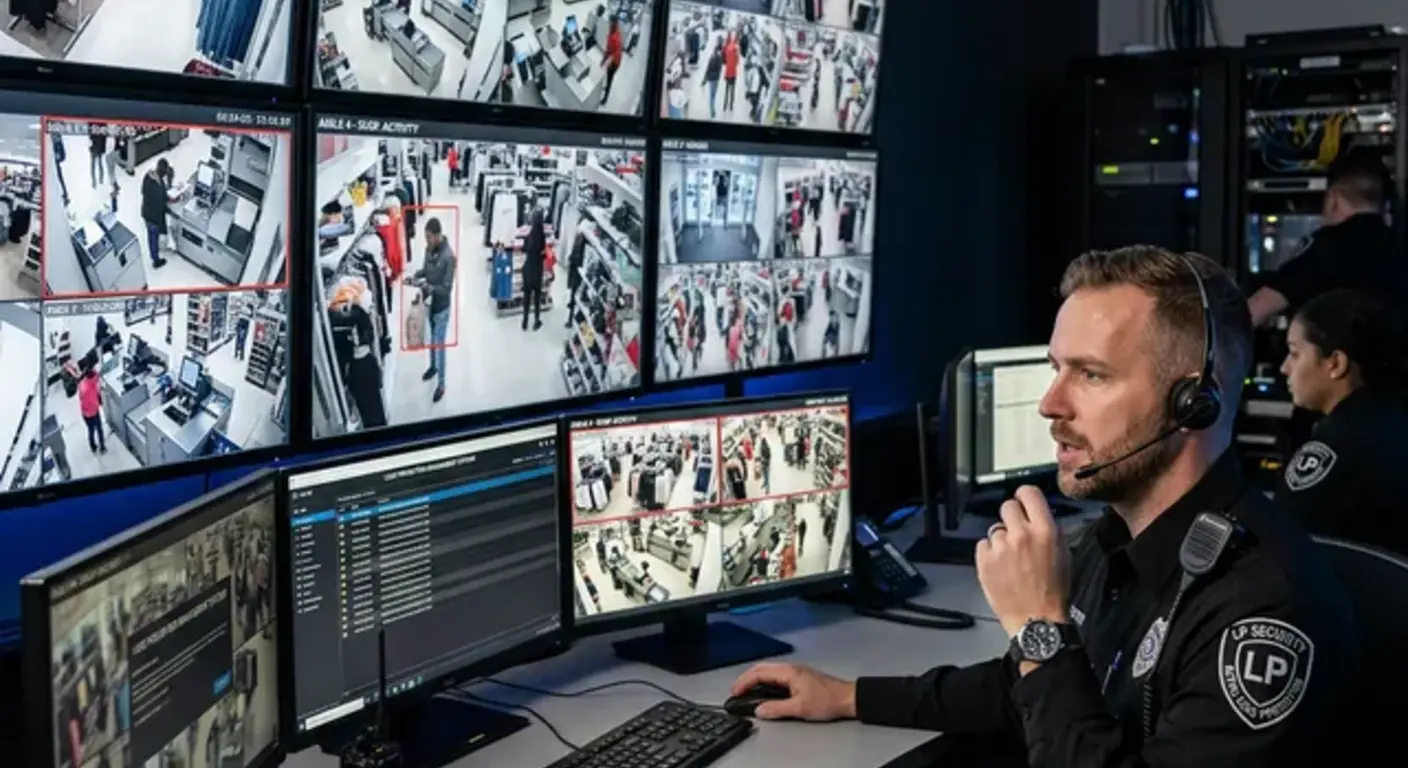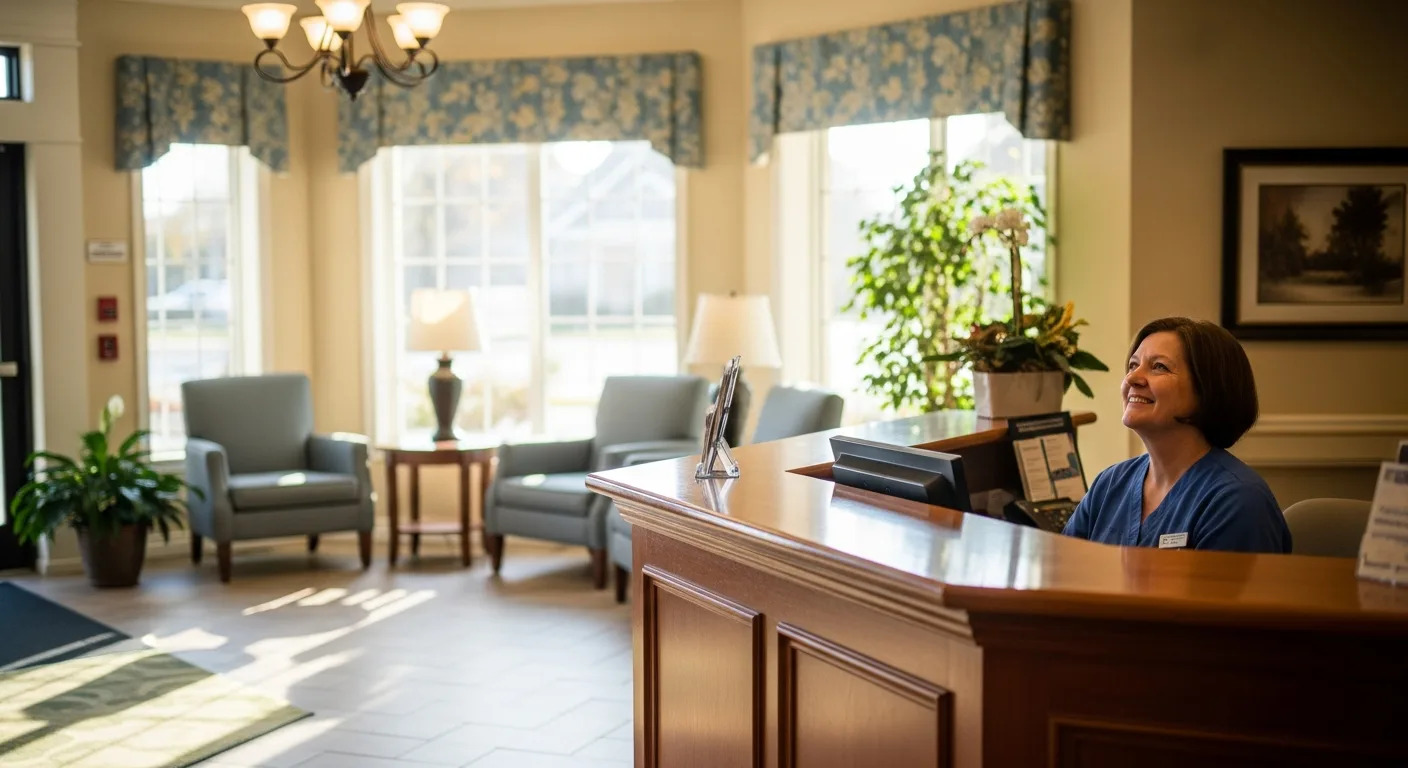
Senior living security balances an open, welcoming community with elopement, abuse and duty-of-care risk. Here's the model — access control, visitor management and the right officers.
Senior living security is a distinct discipline — not a scaled-down version of corporate or retail guarding. Assisted living communities, independent living campuses, skilled nursing facilities and memory care units protect a population that is frail, sometimes cognitively impaired, and legally owed a heightened duty of care. The threats you are managing run in both directions: keeping residents in (elopement and wandering), keeping the wrong people out (unscreened visitors, financial predators, domestic disputes), and preventing harm within (elder abuse, neglect, medication diversion). This guide breaks down what a security program for senior living actually needs to cover, how it differs from acute-care hospital security, what licensing and CMS context applies, and how to price and hire a partner that understands compassionate, unarmed protection of vulnerable adults.
Senior living security combines wander/elopement management, controlled visitor access, elder-abuse deterrence and emergency preparedness — delivered primarily by unarmed, trauma-informed officers paired with electronic access control and video. It is separate from acute-care hospital and healthcare security, which handles ER violence and clinical throughput. Budget for a soft, service-oriented presence (concierge-style front desk, patrol, alarm response), verify the vendor's state license and insurance, and align your program with the CMS Emergency Preparedness Rule if you participate in Medicare or Medicaid.
What senior living security actually protects against
The risk profile of a senior living community is unlike any other buyer vertical. In an office you are protecting assets and access; in a warehouse you are protecting inventory. Here you are protecting people who may not be able to protect, orient, or advocate for themselves. The core threat categories are:
- Resident elopement and wandering. The Alzheimer's Association reports that six in ten people living with dementia will wander at least once, and many do so repeatedly — a behavior that can be life-threatening, especially in extreme weather or near traffic and water. A resident who leaves a memory care unit undetected is the single highest-liability event in this industry.
- Elder abuse and neglect. The National Center on Elder Abuse estimates roughly 1 in 10 older adults experiences some form of abuse, and institutional prevalence studies report even higher rates inside facilities. Abuse can come from staff, visitors, or other residents. Security's role is deterrence, documentation, and enforcing duty-of-care controls, not clinical intervention.
- Unauthorized and hostile visitors. Estranged family members, financial scammers, ex-partners subject to protective orders, and solicitors all try to reach residents. Visitor management is the front line.
- Emergencies. Fire, severe weather, medical events, power loss, and active-threat scenarios each require a rehearsed response with a population that cannot self-evacuate quickly.
- Property and after-hours risk. Sprawling campuses, parking structures, and low overnight staffing create openings for theft, trespass, and vandalism.
Why this is not hospital-healthcare security
It is worth being precise, because the two are frequently conflated. Acute-care hospital and healthcare security centers on emergency-department violence, behavioral-health holds, infant/patient abduction, clinical staff protection, and high-volume public throughput — often with a more assertive, sometimes armed or defensive-tactics-trained posture. Senior living is a residential environment where people live for years. The dominant skill is patience and de-escalation with cognitively impaired residents, not managing a chaotic ER. Officers who excel in one setting can fail badly in the other. Treat them as separate hiring specs.
Wander and elopement management: the highest-stakes control
Elopement is where security, technology, and clinical care overlap most tightly. A credible program layers several controls so that no single failure lets a resident leave undetected:
- Wander-management systems. RFID or Wi-Fi wristbands/anklets that trigger door alarms or magnetic locks when an at-risk resident approaches an exit. Officers must be trained to respond to these alarms instantly — not silence them.
- Secured egress and delayed-egress hardware. Memory care perimeters use controlled doors that comply with life-safety fire codes (delayed egress, not hard locks that trap residents in a fire).
- Perimeter and door video surveillance. Cameras on every exit, courtyard, and blind corner, with alarm-linked review so a triggered door pulls up live footage for the officer.
- Roving mobile patrol. Interior and grounds patrols that verify door integrity, check courtyards, and provide a physical presence overnight when clinical staffing thins.
- Wanderer response protocol. A written, drilled procedure — immediate headcount, exit sweep, and a 911/missing-person escalation if the resident is not located within a set window (the Alzheimer's Association recommends calling 911 if a person with dementia is not found within 15 minutes).
Visitor management and access control
Every person who enters a senior living community should be accounted for. A modern program uses electronic visitor management (sign-in, photo capture, badge, watch-list screening against protective orders) at a single, staffed main entrance, with all other doors on credentialed access control. The security officer at the front desk is often the most visible role — functioning as a warm concierge to families while quietly enforcing screening. This dual "hospitality + protection" posture is the defining feature of good senior living security and mirrors the approach used in hotel and hospitality security.
Access control also protects residents from a subtler threat: financial exploitation. Restricting who can reach a resident's room, logging visitors, and flagging unusual patterns (a "new best friend" making frequent visits, unfamiliar people asking about a resident's finances) turns the security desk into an early-warning system for elder financial abuse.
Elder-abuse prevention and duty of care
Senior living operators carry a legal duty of care. When that duty is breached and a resident is harmed, the facility faces negligent security liability — a claim that inadequate or negligent security foreseeably allowed harm. Security cannot practice medicine, but it materially reduces this exposure by:
- Maintaining a visible, documented presence that deters predatory visitors and misconduct.
- Providing camera coverage of common areas (never resident rooms, for dignity and privacy) that creates an evidentiary record.
- Enforcing visitor screening against restraining orders and barred-person lists.
- Serving as trained mandated-reporter-aware eyes and ears — officers who know how to recognize and report signs of abuse to management and authorities.
- Controlling access to medication rooms and other diversion-prone areas.
Unarmed, compassionate officers — the right staffing model
For the vast majority of senior living settings, unarmed officers are the correct default. A firearm in a memory care unit is a liability, not a safeguard — residents can grab it, and the scenarios these communities face (a confused resident, a grieving family, a wandering elder) call for de-escalation, not force. Reserve armed security for narrow situations: a specific, credible threat (a resident hiding from a violent domestic partner), high-value cash handling, or a location with documented serious crime — and only after a formal risk assessment. Understanding an officer's arrest powers and the applicable use-of-force law in your state matters even for unarmed teams.
The traits that separate a great senior living security guard from an average one:
- Dementia-aware communication and redirection training.
- Patience and a service temperament — this is a residential home, not a checkpoint.
- Familiarity with life-safety systems, wander alarms, and evacuation of non-ambulatory residents.
- Discretion and dignity — residents and families should feel cared for, not policed.
- Low turnover, so officers know residents by name and can spot behavioral changes.
Emergency preparedness and the CMS context
If your community participates in Medicare or Medicaid, the CMS Emergency Preparedness Rule (effective November 2016, revised 2019) applies. It requires facilities — including long-term care — to maintain an emergency preparedness program built on four core elements: an all-hazards emergency plan (grounded in a facility- and community-based risk assessment), policies and procedures, a communication plan, and training and testing. Long-term care facilities carry heightened obligations under §483.73: they must review and update the program annually (not the every-two-years cycle other providers get) and complete two testing exercises per year, at least one a full-scale drill.
Your security vendor is not responsible for CMS compliance — you are — but a good partner integrates into it: officers participate in drills, know their Incident Command role, understand evacuation and shelter-in-place procedures, and support resident tracking during an event. When evaluating vendors, ask how they plug into your Emergency Operations Plan.
State licensing and how to verify a vendor
Private security companies and their officers are licensed at the state level (for example, California's Bureau of Security and Investigative Services / PPO license; similar boards exist in Texas, Florida, New York and most other states). Requirements typically include company licensing, individual guard registration/permits, background checks, and minimum training hours — with additional certification for armed officers. Do not take a vendor's word for it: verify the security company's license directly with the state regulator, and confirm every posted officer is individually registered.
Equally important is insurance. Before signing, require a current certificate of insurance naming your community as an additional insured, with general liability, professional/errors-and-omissions, and workers' comp at limits appropriate to a vulnerable-population setting. Given the negligent-security exposure in this vertical, thin coverage is a red flag. For the full process, see our guide on how to hire a security guard company.
Cost of senior living security
Pricing follows the same drivers as other guarding contracts: officer type, hours of coverage, site complexity, and local wage floors. Use these guides for current benchmarks:
| Coverage model | Typical use in senior living | Cost reference |
|---|---|---|
| Unarmed officer (hourly) | Front desk / concierge, overnight presence, memory care support | Unarmed guard hourly rate |
| Armed officer (hourly) | Rare — specific documented threat only | Armed guard cost |
| 24/7 continuous coverage | Larger campuses, skilled nursing, secured memory care | 24/7 guard cost |
| Mobile patrol (per visit) | Independent living / smaller communities, overnight sweeps | Mobile patrol cost |
| Camera / access system | Exit monitoring, common-area coverage, wander integration | Camera installation cost |
Most communities blend models: a staffed daytime concierge desk, a lighter overnight officer or mobile patrol, and technology (cameras, wander alarms, access control) that lets fewer officers cover more ground. For a full breakdown of the variables, see how much security costs, or model your own scenario with our security cost calculator.
Buyer checklist: hiring senior living security
| Check | Why it matters |
|---|---|
| State company license + individual guard registrations verified | Unlicensed guards void your liability protection |
| Certificate of insurance, you named as additional insured | Negligent-security exposure is high in this vertical |
| Documented dementia / de-escalation training | Wandering and confused residents require skill, not force |
| Written elopement response protocol | Elopement is the top liability event |
| Integration with your CMS Emergency Operations Plan | Required for Medicare/Medicaid participants (§483.73) |
| Unarmed default; armed only after risk assessment | Firearms create risk in a resident setting |
| Low advertised turnover / continuity of officers | Officers who know residents spot abuse and decline earlier |
| References from other senior living / healthcare clients | Sector experience is not transferable from every setting |
Related environments worth reviewing
If your organization spans property types, several adjacent guides apply. Continuing-care campuses with independent-living apartments overlap with apartment and multifamily security and residential and HOA security. Facilities that host public fundraisers or family galas should review event security. And organizations with corporate headquarters behind their community footprint will want corporate security coverage as well.
The buyer takeaway
Senior living security succeeds when it is compassionate, layered, and verifiable. Default to well-trained unarmed officers who can redirect a wandering resident and warmly screen a visitor in the same shift. Wrap them in wander-management technology, exit-focused video surveillance, and disciplined access control. Confirm the vendor's state license and insurance, insist on a written elopement protocol, and make sure they slot into your CMS emergency plan. Do that, and you convert your single largest liability — harm to a vulnerable resident — into a managed, documented, defensible program.
Ready to compare licensed providers? Get free quotes from vetted senior living security companies, or browse licensed security companies in your state to start building your shortlist.
Frequently asked questions
Should senior living security guards be armed or unarmed?+
How is senior living security different from hospital security?+
What does the CMS Emergency Preparedness Rule require of senior living facilities?+
How do I manage resident wandering and elopement?+
How much does security cost for a senior living community?+
Share this guide
Sources
- CMS Emergency Preparedness Rule
- ASPR TRACIE — CMS EP Rule: Long-Term Care Requirements (§483.73, annual review, two exercises)
- Alzheimer's Association — Wandering (6 in 10 people with dementia wander; call 911 after 15 minutes)
- National Center on Elder Abuse — Research, Statistics & Data (1 in 10 older adults)
- The prevalence of elder abuse in institutional settings: systematic review and meta-analysis (NCBI/PMC)