Cargo theft happens in motion — in the yard, last mile and in transit. Here's how to protect freight with TAPA/C-TPAT practices, tech and guards (distinct from warehouse security).
Cargo doesn't get stolen where it sits still behind a fence and a card reader — it gets stolen the moment it starts moving. The riskiest hours in a shipment's life are the yard hand-off, the first mile out the gate, the fuel stop 200 miles down the interstate, and the last-mile drop. That's the entire premise of modern cargo theft prevention: protect the load in motion, not just the building it left. In 2025, organized crews stole an estimated $725 million in freight across the U.S. and Canada — a 60% jump from the prior year even though the raw number of incidents barely moved. Thieves got more selective, more patient, and more digital. This guide is for the shipper, 3PL, broker, or DC operator deciding what security actually reduces loss between the dock and the delivery.
Effective cargo theft prevention layers physical control at the yard gate, in-transit visibility (GPS, geofencing, high-security seals), driver and carrier vetting, and a fast covert-recovery playbook — mapped to the TAPA FSR/TSR standards and C-TPAT minimum security criteria. Because roughly 40% of theft is now "strategic" (fraud, fictitious pickups, double-brokering) rather than a smash-and-grab, verifying who is actually picking up the load matters as much as guarding it. For the warehouse building itself, see our separate warehouse and industrial security guide — this page is about the freight in the yard, on the road, and at the door.
Cargo in motion vs. the warehouse building
It's worth drawing the line clearly, because buyers waste money guarding the wrong asset. Securing a distribution center — perimeter fencing, access control, guard force, dock-door discipline — is covered in depth in warehouse and industrial security. This guide picks up where that building ends: the trailer in the yard waiting to be pulled, the truck that just cleared the gate, the driver who parks at an unsecured lot overnight, and the box van doing residential last-mile drops. Different threat, different countermeasures. A hardened building with a wide-open yard and no in-transit visibility is a common and expensive mistake.
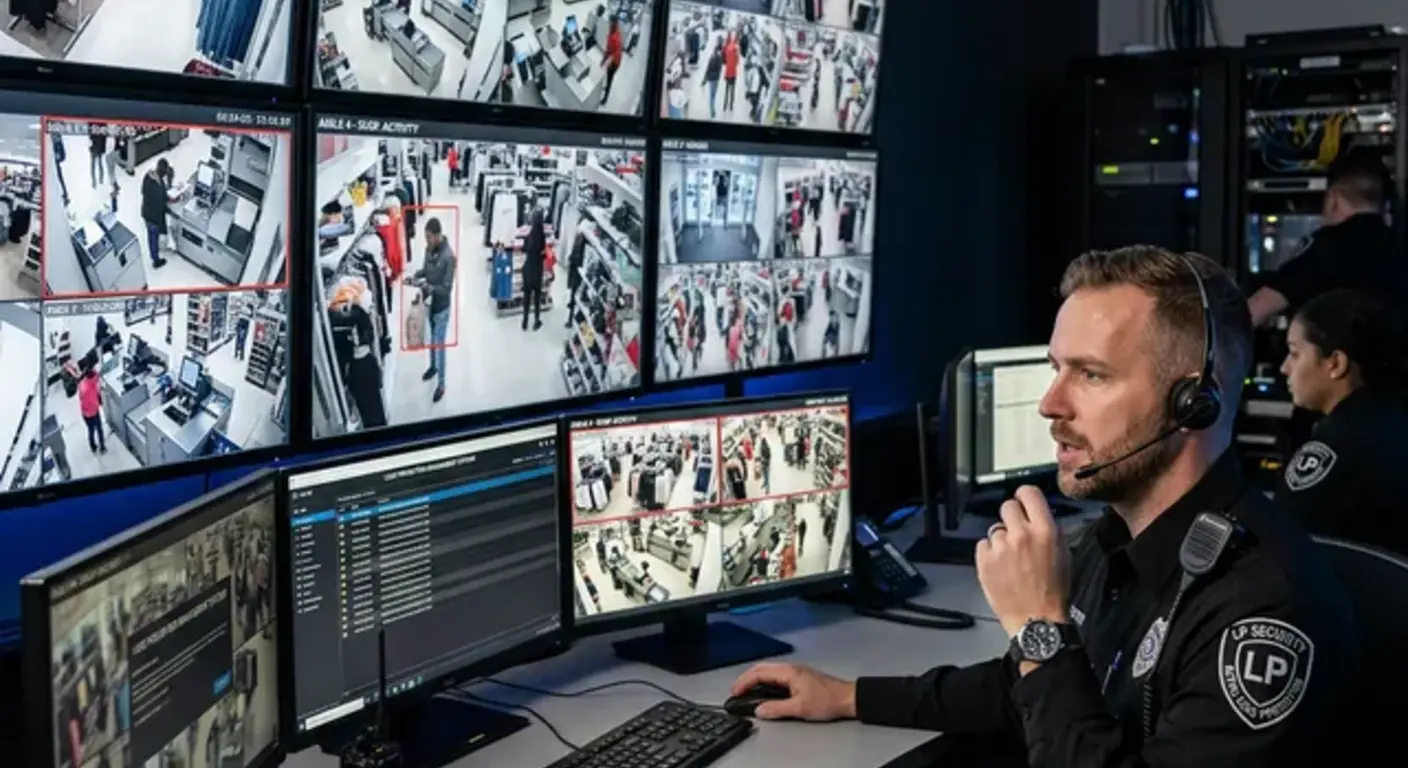
The distinction also decides who you hire. Facility protection leans on stationary security guards and video surveillance. Cargo-in-motion protection leans on mobile patrol to sweep yards and staging lots, telematics providers for tracking, and — for high-value or high-risk lanes — armed security escorts. Retailers moving finished goods should also read retail loss prevention, since the shrink problem continues past the dock into the store network.
Where and how cargo theft actually happens
Verisk CargoNet's 2025 analysis recorded 3,594 supply-chain crime events in the U.S. and Canada — essentially flat versus 3,607 in 2024 — but confirmed cargo thefts rose 18% (to 2,646) and the average loss per theft climbed 36% to $273,990. Translation: fewer, bigger, smarter hits. California remained the worst state (1,218 incidents), but the map is spreading — activity fell in Los Angeles County while surging in Kern County (up 82%), and states like New Jersey (+50%), Indiana (+30%), and Pennsylvania (+24%) all rose sharply. Food and beverage was the most-targeted category (708 thefts, up 47%), and metals theft jumped 77% on copper demand.
Opportunistic vs. strategic theft
The single most important shift for buyers to understand is the split between two theft models:
- Opportunistic (straight) theft — the classic version. A trailer left unattended at a truck stop, an unlocked yard, a load staged too long. Countered with physical hardening: locks, seals, secured parking, patrols, GPS.
- Strategic theft — deception-based fraud where criminals trick a legitimate party into handing the freight over willingly. This includes fictitious pickups (a fake driver with forged paperwork collects the load at your dock), double-brokering scams, and carrier identity theft. Per CargoNet, strategic methods grew from roughly 5% to about 40% of incidents in just a few years; identity-fraud complaints spiked 438% in 2023 and fictitious pickups climbed from ~66 per year (2012–2022) to 576 in 2023.
Strategic theft means your best physical security can be defeated by a clean-looking driver with a cloned MC number. That's why vetting who picks up the load now sits alongside guarding it — a point most facility-only security plans miss.
A layered cargo theft prevention program
No single tool works. The load has to be protected across every state it passes through — staged, hooked, rolling, parked, delivered. Build in four layers.
1. Yard and gate control
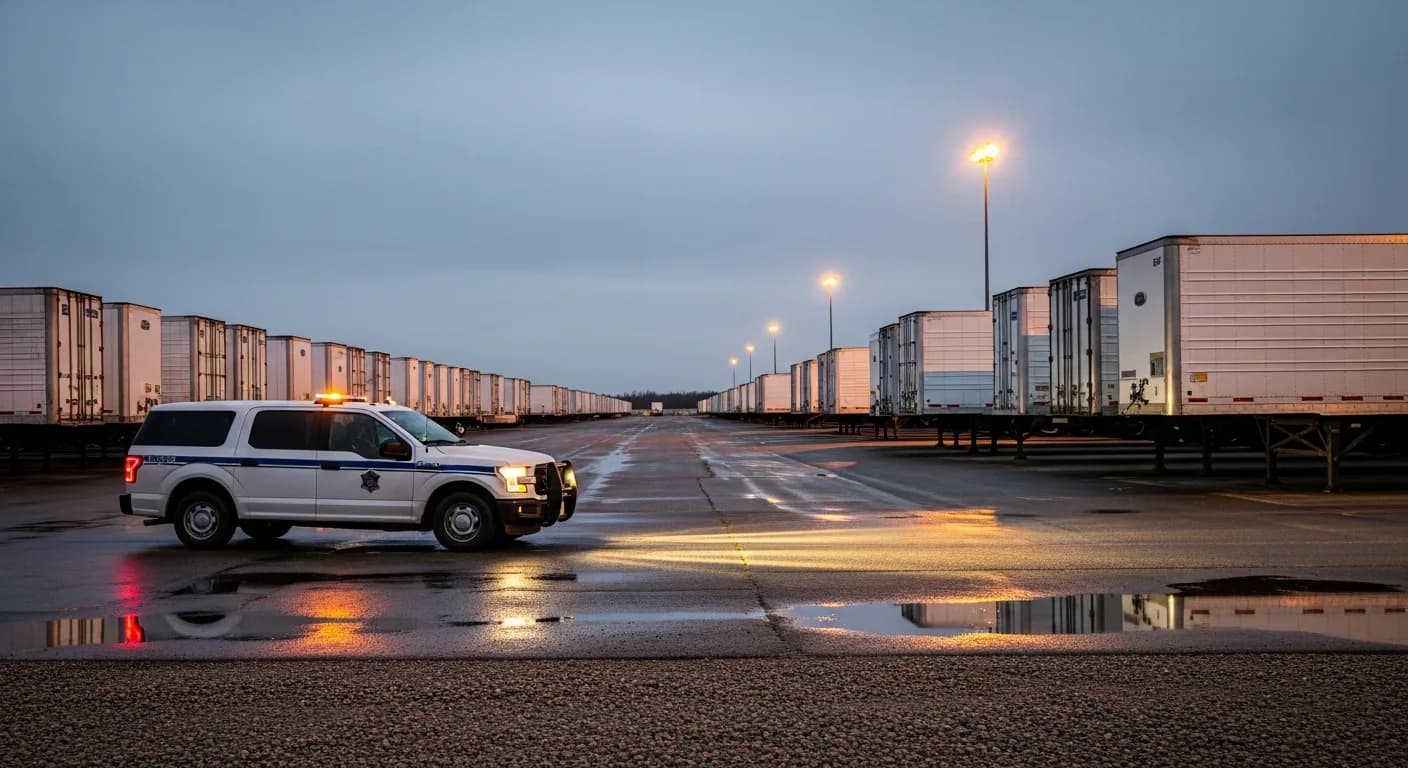
The yard is a warehouse with wheels and no walls. Controls that matter: a staffed or camera-verified gate with driver-ID and load-number matching, a yard check-in/out log, seal verification at both gate passes, and no unattended loaded trailers left overnight without a kingpin or landing-gear lock. A mobile patrol unit sweeping the yard and adjacent staging lots on randomized intervals deters the surveillance that precedes most organized hits. For sites with a fixed post, stationary security guards at the gate handle credential checks and the fictitious-pickup catch — arguably the highest-ROI human control you can deploy.
2. In-transit visibility and hardware
Once the truck rolls, visibility is everything. The proven stack:
- High-security bolt/barrier seals (ISO 17712 rated) plus documented seal-verification at each custody change.
- GPS tracking on the tractor, trailer, and — for high-value loads — a covert secondary tracker hidden in the freight itself so a "clean" trailer swap doesn't blind you.
- Geofencing and route rules — automated alerts on unplanned stops, deviations, or the trailer moving during off-hours. The first red flag on a stolen load is almost always an unscheduled stop within 200 miles of pickup.
- Secured parking and "no stop in the first 200 miles" policies for high-risk lanes.
3. Driver and carrier vetting
This is the strategic-theft firewall. Before you tender a load: verify the carrier's MC/DOT authority is active and matches contact details you independently sourced (not the ones on the inbound email), confirm the pickup driver's identity against the dispatched name, use call-back verification to a known number, and watch for double-broker tells (recently reactivated authority, mismatched insurance certificates, pressure to move fast). Because brokers sit at the center of the transaction, they're a prime target — carrier-identity theft lets a fraudster bid on and re-broker your load. Require a current certificate of insurance from every carrier and confirm it directly with the issuer.
4. Escort and recovery for high-value lanes
For pharma, electronics, metals, or any load north of six figures on a known hotspot lane, a chase-car or armed security escort and a pre-agreed covert-recovery protocol with local law enforcement and your GPS provider dramatically cut loss. The recovery window is short — every hour after theft, the odds of getting freight back fall.
Cargo theft prevention: standards buyers should know
Three frameworks anchor a credible program. Aligning to them also helps you qualify vendors and, often, lower cargo-insurance premiums.
| Standard | What it covers | Who it's for |
|---|---|---|
| TAPA FSR (Facility Security Requirements) | Security for facilities storing high-value theft-targeted (HVTT) goods — warehouses and DCs. Certification Levels A/B/C. | Shippers, 3PLs, DC operators |
| TAPA TSR (Trucking Security Requirements) | Over-the-road transport: driver screening, GPS tracking, cargo locking, risk-based route planning, last-mile vans, sea-container road moves. Levels 1/2/3. | Carriers, fleet operators, brokers buying trucking |
| C-TPAT / CTPAT | CBP voluntary supply-chain security program; 12 minimum-security-criteria categories including cybersecurity, business-partner and container security. | Importers, cross-border carriers, brokers |
TAPA (Transported Asset Protection Association) publishes the FSR and TSR standards; the 2023 editions became effective September 15, 2023, with a scheduled 2026 revision on the regular three-year cycle. TSR certification is achieved via audit through a TAPA-approved Independent Audit Body, and TAPA notes that over 80% of cargo losses reported to its EMEA intelligence system involve criminal attacks on vehicles — which is exactly why the in-transit layer matters so much.
C-TPAT, run by U.S. Customs and Border Protection, is free to join and now spans more than 11,400 certified partners accounting for over half of U.S. import value. Its minimum security criteria were last majorly revised in 2019 to a risk-based "must/should" structure and added cybersecurity as a physical-security requirement — a direct response to strategic, cyber-enabled theft. Certified importers are meaningfully less likely to be inspected at the port, and Tier II/III status brings deeper benefits. It won't stop a domestic fictitious pickup, but it hardens your cross-border chain and your business-partner vetting.
Buyer's checklist: vetting a cargo security vendor
Whether you're hiring guards, patrols, or a transport-security partner, run this list. For the full process see how to hire a security guard company and how to verify a security company license.
| Check | Why it matters |
|---|---|
| State-issued security license verified | Unlicensed guards = uninsured liability exposure |
| Certificate of insurance confirmed with the issuer | Cloned/expired COIs are a fraud tell — verify it |
| TAPA FSR/TSR familiarity or C-TPAT experience | Signals they understand cargo-specific threats, not just building guarding |
| 24/7 GPS/geofence monitoring and escalation SLA | The first unplanned stop is your alarm; response time = recovery odds |
| Documented covert-recovery protocol with law enforcement | Recovery window closes fast after a theft |
| Driver/carrier vetting process for strategic theft | ~40% of theft is now fraud-based, not physical |
| Use-of-force and arrest-authority training | Know the limits — see arrest powers and use-of-force law |
Get scope and liability right up front. A cargo loss where the guard or carrier was negligent can expose you to a negligent security claim, so the contract, insurance, and post orders need to match the risk you're actually running.
What cargo security costs
Pricing depends on the layer. A stationary gate guard and a roving mobile patrol program are the two most common line items; escort work and armed coverage cost more. Ballpark your budget with these guides: unarmed guard hourly rates, armed guard cost, 24/7 coverage cost, mobile patrol cost, and camera installation cost. The broader how much does security cost overview and our security cost calculator help you model a layered program rather than a single post. Weigh it against exposure: at an average $273,990 per confirmed theft, one prevented loss pays for years of coverage on most lanes.
Related security programs
Cargo rarely exists in isolation. If your operation spans other environments, these guides connect: construction site security for materials and equipment theft, corporate security and corporate security services for enterprise-wide risk programs, and event security or hotel and hospitality security for logistics tied to venues. Facility-based verticals like hospital and healthcare security, apartment and multifamily security, and residential and HOA security share the same vendor-vetting fundamentals even if the threat differs.
Buyer takeaway
Cargo theft prevention is a chain-of-custody problem, not a building problem. The load is most exposed the instant it moves, and in 2025 the biggest losses came from crews who either targeted high-value freight in transit or simply talked their way into it with forged paperwork. Cover all four layers — yard/gate control, in-transit visibility, driver and carrier vetting, and an escort/recovery plan for your high-risk lanes — and align to TAPA and C-TPAT so your program is auditable and insurable. Guard the building separately with warehouse and industrial security. When you're ready to compare vetted, licensed providers who understand freight-in-motion, get quotes, browse security companies near your lanes, and price the program with our cost calculator.
Frequently asked questions
What is the difference between cargo security and warehouse security?+
What is strategic cargo theft and how is it different from regular theft?+
What are the TAPA FSR and TSR standards?+
Does C-TPAT prevent cargo theft?+
How much does cargo security cost?+
Share this guide
Sources
- Verisk/CargoNet — Cargo Theft Losses Surge to Estimated $725 Million in 2025
- Verisk Newsroom — 2025 cargo theft analysis ($725M, high-value targeting)
- CargoNet — 2025 Q3 Supply Chain Risk Trends (strategic theft, social engineering)
- TAPA EMEA — Facility Security Requirements (FSR)
- TAPA EMEA — Trucking Security Requirements (TSR)
- U.S. CBP — CTPAT Minimum Security Criteria
- U.S. CBP — CTPAT program overview and benefits
- Travelers — Strategic Cargo Theft (fictitious pickups, double-brokering)