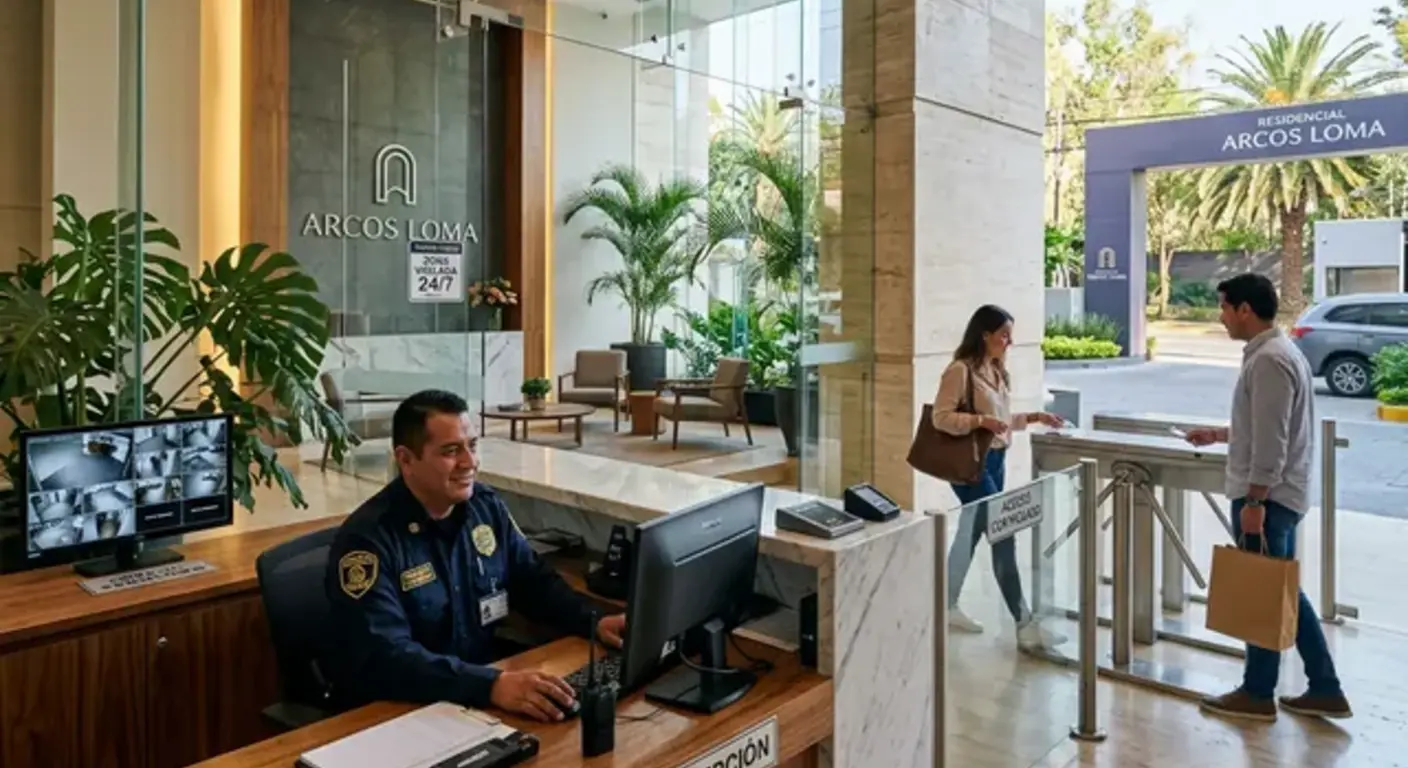
Security isn't one-size-fits-all. Pick your industry for a buyer's guide written for it — the specific threats, the security model that fits, the compliance, and what it costs.
Security is not one-size-fits-all. A hospital's biggest risk is violence against its own staff; a distribution center's is cargo that walks out the dock door; a dispensary's is a state-mandated security plan it must pass to keep its license. The right guard program, technology mix and budget all change with the industry you're protecting — and the buyer who starts from a generic guard quote almost always buys the wrong shape of coverage at the wrong hours. This hub is the map: how to think about sector risk, how 23 industries compare on coverage model and risk driver, and a buyer's guide written specifically for each one.
Start with your industry's specific risk, not a generic guard quote. Each guide below covers the threat model, the right mix of guards, patrol and technology, the sector's compliance, and cost — then get quotes from licensed providers who work in it.
Why security programs differ by industry
Sector matters because it changes five things at once, and each of them moves your budget independently.
- Threat profile. The thing most likely to happen to you is sector-specific: assault on staff in healthcare, internal shrink in distribution, targeted violence in a house of worship, after-hours equipment theft on a job site. Programs built for the wrong threat can be fully staffed and still fail.
- Coverage window. Some sites carry their risk while occupied and busy (retail, nightlife, hospitals); others carry it entirely while empty (construction, dealerships, self-storage). That single distinction usually decides whether you are buying a continuous post, a scheduled patrol, or monitored technology.
- Regulatory overlay. Cannabis, banking, critical infrastructure, healthcare and schools all inherit outside requirements that specify parts of the program for you. In those sectors, compliance is a hard floor, and a vendor who does not know the rule text will cost you more than they save.
- Liability posture. In residential, hospitality and multifamily, the dominant financial risk is a negligent-security claim rather than the underlying loss. That elevates documentation — logs, incident reports, and evidence you acted on what you knew — to the level of a deliverable.
- Cost driver. Consequential loss varies enormously by sector. An hour of downtime at a manufacturing plant, a missed milestone on a construction schedule, and a lost license at a dispensary are all far larger than the asset that triggered them, which changes how much prevention is rationally worth.
Every sector guide below is built on those five variables, so you can compare like with like even across very different operations.
Industry security models at a glance
This table is the fastest way to locate your operation and sanity-check a proposal. If a provider is quoting you a 24/7 armed post for a sector whose risk lives entirely in the after-hours window, you now have the question to ask. Armed posture in particular is not a preference — it is a sector norm you should have a specific reason to depart from.
| Industry | Typical coverage model | Primary risk driver | Armed? | Regulatory overlay |
|---|---|---|---|---|
| Corporate & office security | Business-hours lobby post, often with an after-hours patrol or console | Tailgating, workplace violence and terminated-employee incidents | Usually unarmed | Employer duty of care; state workplace-violence rules |
| Data center security | 24/7 manned entry plus a continuously staffed operations console | Unauthorized physical access to customer racks; insider and vendor access | Usually unarmed; armed at some wholesale and government-adjacent sites | Customer audit regimes (SOC 2, ISO 27001, PCI) drive the controls |
| Bank & financial institution security | Branch-hours post; scheduled cash-in-transit and ATM servicing coverage | Robbery, ATM attacks and cash-in-transit exposure | Mixed — armed is common for cash movement, contested inside branches | Federal bank protection requirements plus examiner expectations |
| Government & municipal security | Screening posts at every public entrance during public hours | Weapons entering a building the public has a right to enter | Mixed by post — screening often unarmed, response posts armed | Public-procurement rules; federal facility risk-management guidance |
| Retail & loss prevention | Peak-hours single post; door coverage at open and close | Shrink, organized retail crime and violence against staff | Almost always unarmed | State workplace-violence prevention rules; merchant detention law |
| Hotel & hospitality security | Overnight post, scaling up on event and weekend nights | Guest-on-guest incidents and negligent-security claims | Almost always unarmed | Premises liability; in some jurisdictions hotel-worker panic-button rules |
| Bar & nightclub security | Door and floor staff on operating nights only, scaled to occupancy | Intoxicated-patron violence, over-service liability and capacity breaches | Effectively never armed | Liquor-license conditions, dram-shop exposure, and state guard-licensing questions for door staff |
| Cannabis dispensary security | Open-hours post at retail; 24/7 monitoring at cultivation and processing | Cash and product robbery, plus loss of the operating license | Mixed and state-dependent; some states restrict armed guards at licensed premises | State cannabis regulations prescribe cameras, retention, alarms and access logs |
| Film production & set security | Project-based coverage keyed to the shooting schedule, including overnight equipment watch | Equipment theft, unauthorized access and talent privacy | Usually unarmed, with armed exceptions for high-profile talent | Location permits; state licensing in the production hub states |
| Hospital & healthcare security | 24/7 coverage anchored on the emergency department and behavioral health | Violence against clinical staff | Genuinely contested — many systems run unarmed, others armed or off-duty police | Accreditation expectations, patient-rights law, and state healthcare workplace-violence statutes |
| Senior & assisted living security | Overnight and access-control coverage; concierge-style daytime presence | Resident elopement and elder abuse or exploitation | Unarmed | Care-facility licensing and emergency-preparedness requirements |
| Apartment & multifamily security | Night roving patrol; courtesy or gate post at larger communities | Premises-liability exposure from foreseeable crime on the property | Usually unarmed | Negligent-security case law; local crime-free housing programs |
| Gated community security | Manned or virtual gate, often paired with a roving route | Unscreened vehicle access and resident expectation gaps | Unarmed | Governing documents and state HOA law |
| Residential & HOA security | Scheduled roving patrol; vacation and vacant-home checks | Property crime plus the governance risk of over-promising to residents | Unarmed | Governing documents; the limits of private enforcement |
| House of worship security | Service-hours coverage, usually a trained volunteer team with paid support | Targeted violence against an intentionally open gathering | Highly variable; often the congregation's most divisive decision | Federal nonprofit security grant requirements where grant funding is used |
| School & campus security | School-day coverage at K-12; 24/7 at residential campuses | Targeted violence, plus everyday conflict and access control | State-dependent and politically charged; varies district by district | State school-safety statutes, campus crime reporting, and student-privacy law |
| Warehouse & industrial security | Gatehouse during operating hours plus overnight patrol or 24/7 posts | Cargo and inventory loss, much of it internal | Usually unarmed | Workplace safety rules; customer supply-chain security requirements |
| Manufacturing plant security | Gate and lobby posts across production shifts | Contractor access, intellectual property and production disruption | Usually unarmed | Workplace safety requirements; customer and export-control obligations |
| Cargo & logistics security | Yard control plus in-transit and staging protection | Cargo theft, including strategic theft through identity fraud | Mixed; escorts for high-value loads | Carrier vetting duties and customer supply-chain security programs |
| Critical infrastructure & utility security | Remote, unmanned sites with patrol and monitored detection; manned posts at major facilities | Sabotage and targeted attack, plus copper and equipment theft | Mixed by site criticality | Sector-specific physical-security regulation and federal security directives |
| Construction site security | After-hours only — the risk window is nights, weekends and holidays | Equipment, tool and material theft, plus schedule delay | Usually unarmed | Insurer and lender conditions; site safety rules |
| Self-storage security | Largely unmanned — gate access control, cameras and periodic patrol | Break-ins during unstaffed hours and tenant-on-tenant theft | Unarmed if staffed at all | State self-storage lien law; limited liability for tenant goods |
| Car dealership security | After-hours patrol or overnight post on the lot | Vehicle and catalytic-converter theft, plus key-box compromise | Usually unarmed | Floor-plan lender and insurer requirements |
Treat the coverage column as a starting hypothesis rather than a prescription. Site size, crime history, insurer conditions and your own incident record all move it, and the sector guides work through those adjustments in detail.
Security guides by industry
Every guide is buyer-focused and US-specific. Choose the closest match to your operation:
Commercial, corporate & office
These sites share a common shape: a controlled lobby, a badge population that changes daily, and a threat model dominated by unauthorized entry and internal incidents rather than street crime.
- Corporate & office security — Lobby, access control and executive-floor coverage for corporate campuses.
- Data center security — Layered physical access, mantraps and 24/7 guards for colocation and enterprise halls.
- Bank & financial institution security — Branch, ATM and cash-handling protection under a federal security-program mandate.
- Government & municipal security — Visitor screening and public-access risk for courthouses, city halls and agencies.
Retail, hospitality & events
Sites in this group are open to the public by design, staffed by young or transient employees, and exposed to intoxication, theft and crowd dynamics. Deterrence and de-escalation matter more than hardening.
- Retail & loss prevention — Uniformed deterrence and loss prevention against theft and organized retail crime.
- Hotel & hospitality security — Guest safety, loss prevention and event coverage for hotels and resorts.
- Bar & nightclub security — Licensed door staff, ID checks and ejection procedures for venues.
- Cannabis dispensary security — State-mandated security plans, cash/product protection and CCTV for cannabis operators.
- Film production & set security — Location, talent and equipment protection for productions.
Healthcare, residential & community
Here the people being protected live, recover or worship on the premises. Programs are judged on how they handle vulnerable populations, and the liability question is foreseeability.
- Hospital & healthcare security — Workplace-violence management and access control for hospitals and clinics.
- Senior & assisted living security — Elopement, visitor and elder-abuse controls for senior communities.
- Apartment & multifamily security — Premises-liability-driven security for institutional apartment operators.
- Gated community security — Gatehouse, access control and patrol for master-planned communities.
- Residential & HOA security — Patrol and gate options for homeowners and HOA boards.
- House of worship security — Volunteer teams, NSGP grants and active-threat planning for congregations.
- School & campus security — SRO vs contract security, visitor management and threat assessment for K-12 and higher ed.
Industrial, logistics & infrastructure
Large footprints, valuable movable assets, and long unoccupied hours. These sites are where technology-plus-patrol models compete hardest against continuous manned posts.
- Warehouse & industrial security — Gate, dock and 24/7 coverage for distribution and storage facilities.
- Manufacturing plant security — Production-floor, IP and contractor-access protection for factories.
- Cargo & logistics security — Cargo-theft prevention in the yard, last mile and in transit.
- Critical infrastructure & utility security — Regulator-driven physical security for substations, plants and pipelines.
- Construction site security — After-hours theft and vandalism protection for job sites.
- Self-storage security — Access control, cameras and remote guarding for self-storage.
- Car dealership security — After-hours lot, inventory and parts-theft protection.
What actually differs: commercial, corporate & office
Corporate & office security
Corporate security is judged on how it feels, not just on what it stops — the same officer is a receptionist to a visiting client and the first responder to a threatening ex-employee. That dual role is why corporate posts are the hardest to staff well and the easiest to underspecify. The threat that actually costs corporate buyers money is rarely burglary; it is tailgating through a badge reader that cost a fortune, and it is a termination that nobody told security about. The mistake buyers make is buying a headcount and skipping the interface: security has to be inside the HR offboarding process and inside the visitor-management workflow, or the guard is furniture. Ask how the provider staffs escalation, not just the post.
Data center security
Data centers are the one vertical where physical security is bought by an auditor as much as by a risk manager. The controls exist because customers demand evidence of them: zoned access from the property line to the cage, two-person rules in sensitive spaces, and access logs that survive a review. That changes the buying criteria — a data center provider is selling documentation discipline as much as presence, and an officer who cannot produce a clean, time-stamped record of every escorted vendor is a failed control, not just a sloppy one. Buyers get this wrong by treating the guard force as separate from the compliance program, then discovering during an audit that the escort logs are on paper in a drawer.
Bank & financial institution security
Banking is unusual because a federal framework obliges the institution to designate a security officer and maintain a written security program — the buyer's obligation exists whether or not a guard is standing in the lobby. That reframes the purchase: you are not deciding whether to have a security program, only how much of it is staffed. The recurring error is assuming a uniformed officer satisfies the requirement; examiners look at procedures, training and equipment, and a guard with no documented post orders adds cost without adding compliance. The armed question is also genuinely contested here — armed presence deters some robbery but changes the profile of a robbery that happens anyway.
Government & municipal security
Government sites carry a constraint no private building has: you cannot solve the problem by excluding the public, because access is the point. So the entire program collapses onto the screening line — magnetometers, X-ray, and the officers running them — and the quality of that line is the quality of the program. The second thing that differs is procurement: public buyers award on a scored solicitation, which means the specification you write becomes the service you get, and vague specifications reliably produce the cheapest compliant bid. Buyers under-budget the counter position, where most real workplace-violence incidents in public buildings actually start, and over-budget roving patrol.
What actually differs: retail, hospitality & events
Retail & loss prevention
Retail is the sector where the wrong security posture creates the loss it was hired to prevent. A no-touch, observe-and-report policy looks weak on paper and is the correct default almost everywhere, because a physical recovery of low-value merchandise is a bad trade against an assault claim. What actually differs in retail is that the officer's product is visible deterrence and incident documentation, not interdiction. Buyers get it wrong by measuring the guard against recovered goods, which pushes officers toward exactly the confrontations the policy forbids. Measure instead on presence at the hours theft concentrates, and on the quality of the reports the store can hand to police.
Hotel & hospitality security
A hotel is a residential building with a new population every night and a legal duty of care to every one of them, which is why hospitality security is really liability management wearing a blazer. The distinctive feature is the demand curve: risk is not spread evenly, it spikes on event nights, holiday weekends and the hours after last call in the lobby bar. Programs that staff a flat schedule are simultaneously overspending Tuesday and understaffed Saturday. The other thing buyers underrate is that hotel officers spend most of their time on guest interaction, so recruiting for demeanor is not a soft preference here — an officer who escalates with a guest generates the exact claim the post exists to prevent.
Bar & nightclub security
Nightlife is the vertical with the widest gap between what operators do and what the law requires, and the gap is usually the licensing question: in a number of states, door staff performing security functions need the same guard credential as any other officer, and many venues staff the door with employees who hold nothing. That is the exposure that closes venues, alongside dram-shop liability that attaches to over-service the door team was supposed to catch. Everything else in this sector follows from intoxication: every ejection is an unplanned use-of-force event with a video record, so the training that matters is de-escalation and the documented ejection procedure, not physical capability.
Cannabis dispensary security
Cannabis is the only sector on this page where the security plan is a licensing document. The state regulator specifies camera coverage, video retention periods, alarm requirements, limited-access areas and visitor logs, and a failed inspection is a threat to the license itself — a category of loss no other retailer faces. Practically, that means the security vendor has to be fluent in your state's rule text, not just competent at guarding, and the CCTV specification is a compliance artifact before it is a deterrent. The mistake operators make is buying to the security plan they filed at license application and never revisiting it as the rules and the footprint change.
Film production & set security
Production security is temporary infrastructure. The perimeter moves every few days, the population is a mix of crew, vendors, and people who genuinely belong on set without a badge, and the schedule is the security plan. What differs most is that lockup — the overnight watch on equipment trucks and staged gear — is usually the biggest line item and the one buyers cut first, right before the loss happens. Because productions move between states, the licensing check has to be run per location, not once at the top of the shoot.
What actually differs: healthcare, residential & community
Hospital & healthcare security
Healthcare inverts the normal security model: the person you may have to restrain is a patient the institution owes a duty of care to, and the environment cannot be locked down without impairing treatment. That makes clinical de-escalation, restraint policy and behavioral-health training the core competency, not perimeter control. Assault against healthcare workers is the sector's defining risk, concentrated in the emergency department, behavioral health and maternity. The armed question is legitimately unresolved in this vertical, and buyers who treat it as obvious in either direction usually have not consulted their clinical leadership. The most common purchasing error is staffing to the building's square footage instead of to the three high-acuity units where incidents actually occur.
Senior & assisted living security
In senior living the highest-stakes failure is not an intruder getting in; it is a resident with cognitive impairment getting out. Elopement management drives the door hardware, the alarm design and the officer's rounds, and it is a life-safety problem tangled with fire-code egress requirements, which is why it cannot be solved by simply locking doors. The second distinctive risk is abuse and financial exploitation by people with legitimate access — staff, visitors and vendors — which makes visitor logging and background-check discipline more valuable than patrol. Buyers frequently hire for a perimeter problem they do not have.
Apartment & multifamily security
Multifamily security is bought against a legal standard, not a threat: once crime on or near the property is foreseeable, an owner who does nothing is exposed, and the size of that exposure dwarfs the cost of the program. This is why documentation is the deliverable — patrol logs, incident reports, and evidence that reported problems were acted on are what defend a claim years later. Owners get two things wrong. They buy visible security as an amenity and market it, which can raise the standard they are held to; and they cut the night patrol first, which is the highest-leverage hour of coverage on almost every residential property.
Gated community security
The gate is a throughput problem disguised as a security control. A manned gatehouse is the most expensive single post most communities will ever buy, and its value depends entirely on whether the workflow for residents, guests, deliveries and contractors is enforceable at rush hour — a gate that waves vehicles through to clear a queue is a decorative expense. This is where virtual gate guarding has changed the math for many boards. The recurring failure is expectation: residents believe the gate makes the community secure, so the board never funds the patrol that covers everything the gate cannot see.
Residential & HOA security
HOA security is as much a governance exercise as a security one, because the board is spending other people's money on a service residents will evaluate emotionally. The controlling distinction is that a courtesy officer deters, observes and reports — they do not police, and they cannot enforce community rules like an authority. Boards that fail to set that expectation in writing get complaints regardless of how good the vendor is. The practical decisions are narrow: how many passes per night, on what route, with what documentation, and whether the budget comes from dues or a special assessment.
House of worship security
Congregations face a threat model most businesses do not — targeted, ideologically motivated violence — while operating under a mission that forbids the obvious mitigation of screening the people who walk in. Almost every congregation therefore builds around a volunteer safety team, which raises questions no commercial buyer faces: what a volunteer may legally do, whether volunteers may be armed under state law and the congregation's own policy, and what insurance responds. Federal nonprofit security grant funding can pay for a substantial share of the hardening, and that funding is the single most underused resource in this vertical. Bring in licensed officers for high-attendance services and known-threat situations rather than trying to staff every hour with volunteers.
School & campus security
Schools are the vertical where the staffing model is a policy choice before it is a security choice: a sworn school resource officer, a contracted guard force, and district-employed safety staff carry different arrest authority, different community consequences and different costs. K-12 and higher education then diverge sharply — a residential campus is a small city with 24/7 population and its own reporting obligations, while a K-12 building is a controlled site with a hard access problem at arrival and dismissal. The intervention with the best evidence behind it is behavioral threat assessment, which is a process the institution owns; no vendor can supply it, and buying guard hours instead of building that process is the most common substitution error.
What actually differs: industrial, logistics & infrastructure
Warehouse & industrial security
Distribution sites concentrate their risk at the dock and the gate, not the fence line, and a large share of the loss is internal or collusive rather than an outside break-in. That points the program at process control — trailer seal verification, driver check-in, gate logs reconciled against the manifest — which is unglamorous work that a guard force either does rigorously or does not do at all. The other structural feature is scale: perimeters are too long to patrol meaningfully by foot, so camera coverage and a patrolling officer with a defined route beat a static post almost everywhere except the gate. Buyers routinely purchase officers for a problem their inventory data would tell them is happening inside.
Manufacturing plant security
A plant's security problem is really an access-governance problem: on any given day contractors, temp labor, auditors and vendor engineers outnumber the visitors a corporate lobby sees in a month, and each one needs the right access for the right shift and nothing more. Intellectual property leaves manufacturing sites through cameras and phones on the production floor far more often than through a break-in, which is why photography policy and escort discipline matter more than fencing. Downtime is also the real currency of loss here — an interruption costs far more per hour than the stolen item that caused it, which changes how much prevention is rationally worth.
Cargo & logistics security
Cargo is the one vertical where the asset is moving and jurisdiction changes hourly, so no site-based program covers it. The threat has also shifted: alongside straight theft from yards and truck stops, strategic theft — where a load is obtained by impersonating a legitimate carrier or broker — moves freight without anyone breaking anything, and no amount of guard presence at your gate addresses it. That makes carrier vetting and dispatch verification part of the security program. On the physical side, the highest-value controls are unglamorous: do not leave a loaded trailer unattended in the first hours after pickup, and control the yard.
Critical infrastructure & utility security
Critical infrastructure differs in two ways that change everything. First, most of the assets are remote, unstaffed and geographically dispersed, so the program is built on detection, assessment and response time rather than on presence — the question is not who is standing there but how fast someone credible arrives. Second, the security posture is prescribed by regulators for the highest-criticality assets, meaning the specification is partly written for you and non-compliance carries penalties independent of any actual loss. The persistent gap buyers overlook is that ordinary metal theft and the reconnaissance that precedes a serious attack look identical on camera, so treating every fence cut as scrap theft loses the warning.
Construction site security
Construction is the purest after-hours risk on this page: the site is busy and self-policing by day and completely exposed at night, so coverage should be shaped to that window rather than spread across the clock. The loss that hurts is not the replacement cost of the stolen equipment, it is the schedule — a stolen tool crib or a cut copper run can idle a crew and blow a milestone worth many times the asset. Requirements also move with the build phase, from an open, unfenced site through the vulnerable period when finished materials are installed but the building is not yet secured. Insurers and lenders often set the floor here, so read those conditions before designing the program.
Self-storage security
Self-storage is the clearest case where a manned post is usually the wrong purchase. Margins do not support continuous staffing, and the effective controls are technological: gate access tied to individual tenant codes so entries are attributable, camera coverage at the gate and drive aisles, lighting, and unit-level alarms at higher-end facilities. The nuance is legal — operators typically disclaim liability for tenant property, which lowers the direct financial exposure but not the reputational one, since a facility with a break-in history loses tenants. Remote guarding with live audio intervention fits this vertical better than almost any other.
Car dealership security
A dealership stores a very large amount of value on an open, deliberately visible lot that cannot be fenced without defeating its own purpose. The specific vulnerabilities are narrow and well known: keys, which are the single point of failure in most dealership thefts, and parts theft that takes minutes per vehicle and is repeated across a row. Because the lot is the showroom, the controls have to be ones that do not make the inventory harder to see — lighting, cameras with usable resolution at plate distance, blocking vehicles at the exits, and a patrol cadence that is not predictable. Key control is free and is where most programs should start.
The decisions that repeat in every sector
Once you understand your industry's risk, four questions come up no matter what you're protecting — and each has a dedicated guide:
- Armed or unarmed? The comparison table above gives the sector norm. Armed coverage costs more, raises your liability profile, and is genuinely right in a minority of settings — cash movement, some critical infrastructure, specific high-threat posts.
- Guards, cameras, or both? Cameras record; officers intervene. Large empty footprints tilt toward monitored technology and patrol; occupied public-facing sites tilt toward presence. See also virtual guarding vs on-site officers.
- In-house or contract? Contract shifts employment liability, recruiting and surge capacity to the vendor. In-house buys control and continuity at a higher true cost than the hourly comparison suggests. Off-duty police is a third model with different authority.
- How many officers? Headcount follows from the coverage window and the number of posts, not from square footage — and a single round-the-clock post takes roughly five officers to staff.
What buyers get wrong across industries
Five errors recur in almost every sector, and they are expensive in the same way each time.
- Buying hours instead of a scope. A guard with no written post orders has no defined job, cannot be held to a standard, and produces nothing you can use in a dispute. The post orders are the product.
- Copying a peer's program. Two properties in the same industry with different crime histories, layouts and hours need different coverage. The sector sets the shape; your site sets the size.
- Ignoring the regulatory floor until inspection. In cannabis, banking, healthcare and critical infrastructure, parts of your program are specified by someone else. Find out what before you write the RFP, not after.
- Under-documenting. In residential, hospitality and multifamily especially, the log you can produce two years later is what answers a negligent-security claim. Absent records, you are defending on memory.
- Skipping the licensing check because the sector felt low-risk. Guard licensing is a state matter that applies regardless of what you're protecting — and hiring an unlicensed provider is its own exposure.
Licensing and vetting apply no matter your industry
Whatever sector you're in, the provider still has to be licensed in the state where the site sits. Private security in the US is regulated state by state — there is no national license — so a firm that is properly licensed in one state may have no standing in the next. Before you compare proposals, confirm the company license, confirm the individual officers, and confirm a separate armed permit for any armed post. Our complete guide to US security licensing explains how the models differ and links a state-by-state reference; how to verify a security company's license is the step-by-step check; and the certificate of insurance guide covers the coverages to require alongside it.
Ask the provider for two references in your industry, at sites of comparable size, and call them. Sector experience is the single best predictor of whether a vendor's post orders will make sense on day one — and it is the cheapest thing to verify.
How to use these guides
Each industry guide follows the same arc so you can move fast: the threat model specific to that sector, the security model (guards, patrol, cameras, access control and where each fits), the compliance that applies, and the cost drivers. Once you know your model, our cross-industry guides handle the rest: how much security costs, how to hire a security company, how many guards you need, what to put in the contract, and how licensing works in your state. When you're ready, get free quotes from licensed providers or browse the directory to find firms working in your city.
Frequently asked questions
Does security vary by industry?+
Which industries most need private security?+
How do I choose security for my specific industry?+
Do armed guards make sense in my industry?+
Does an industry-specific security company cost more?+
Share this guide